
Scorpion Pose (Vrschikasana): Steps, Benefits & Safety Precautions
The body in forearm balance curls the feet forward toward the head, like a scorpion’s curled tail, combining the strength of a forearm stand with the depth of a full backbend. See the steps, benefits, and precautions.
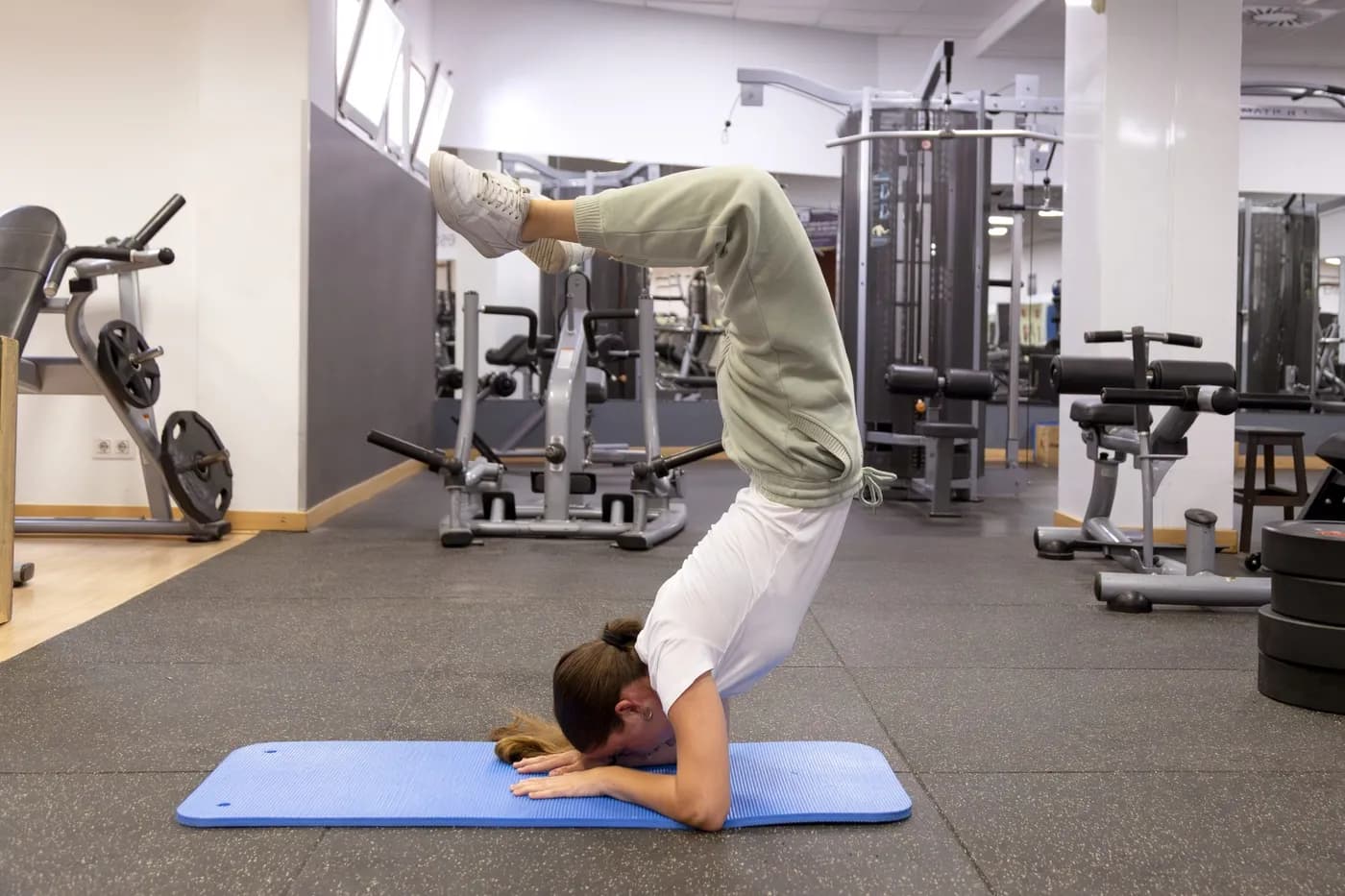
Key Takeaways
- Combines the forearm balance of Pincha Mayurasana with the deep backbend of Wheel Pose.
- Named for the curled feet resembling a scorpion’s tail arching toward its head.
- The half version keeps the legs straighter, still requiring solid forearm balance mastery first.
- Explicitly requires years of foundation – forearm balance and wheel pose must be solid first.
- Held for only 3-5 breaths even at the advanced level, with constant cervical spine awareness.
- Requires qualified instruction with adequate spotting – not appropriate for unsupervised practice.
What is Vrschikasana?
Vrschikasana pronounced vrish-chi-kah-sa-na translates as “Scorpion Pose.” The Sanskrit “vrschika” means scorpion, and the pose is named for its visual resemblance: the body in forearm balance with the feet curled forward toward the head, like a scorpion’s curled tail.
Scorpion pose is one of the most advanced postures in modern yoga, combining the strength and balance of pincha mayurasana (forearm balance) with the deep backbend of urdhva dhanurasana (wheel pose). It appears in advanced ashtanga and intermediate-to-advanced hatha sequences, and is considered an aspirational pose for many committed practitioners.
The half scorpion pose is a more accessible (but still advanced) version where the legs remain straighter rather than curling fully toward the head. Even half scorpion requires established forearm balance and significant backbend mobility.
Vrschikasana Benefits
Physical Benefits
- Builds Extreme Shoulder, Arm, and Core Strength Scorpion pose benefits include the most demanding upper-body and core strengthening in the asana family. The forearm balance alone requires serious shoulder strength.
- Improves Spinal Mobility and Backbend Capacity The deep upper-back extension required for scorpion develops spinal mobility beyond what most other poses can produce.
- Stretches the Front Body Deeply The combination of inversion and backbend stretches the chest, abdomen, and hip flexors in ways no other single pose does.
- Builds Balance and Body Awareness Holding inverted balance with a curving spine demands precise body awareness this skill carries into every other pose.
- Builds Mental Resilience and Fearlessness Approaching scorpion pose develops mental discipline. The pose demands consistency, patience, and the willingness to face fear safely.
- Energising and Empowering Like all inversions, scorpion is highly energising. The deep backbend amplifies this effect.
Mental and Emotional Benefits
How to Do Vrschikasana Step-by-Step Instructions
Key Principles
Do not attempt this pose without years of foundation. Pincha mayurasana (forearm balance) must be solid first. Wheel pose must be accessible. Even then, work toward scorpion under qualified instruction with adequate spotting.
Step 1: Starting Position
Begin in dolphin pose with forearms parallel, shoulder-width apart.
Step 2: Establish Pincha Mayurasana
Kick up into a vertical forearm balance. Hold for several breaths to establish stability.
Step 3: Begin the Backbend
Slowly engage the upper back into extension, opening the chest. The head lifts to look forward.
Step 4: Bend the Knees
Once the upper back has opened, bend the knees and allow the feet to drop toward the head slowly and with control.
Step 5: Final Position and Hold
The feet curl toward the head. Hold for 3–5 breaths only. Maintain awareness of the cervical spine.
Step 6: How to Come Out of Vrschikasana
Slowly straighten the legs back to vertical. Exit pincha mayurasana by lowering one leg at a time. Rest in child’s pose for several breaths to release the spine.
Breathing in Vrschikasana
Slow, controlled. Holding the breath in this position is dangerous. If you can’t breathe normally, the pose is too deep to exit immediately.
Preparatory Poses Before Vrschikasana
Pincha Mayurasana (Forearm Balance) The non-negotiable foundation.
Urdhva Dhanurasana (Wheel Pose) Builds the backbend capacity.
Bhujangasana (Cobra) Develops gentle backbend tolerance.
Ardha Pincha Mayurasana (Dolphin) Builds shoulder strength.
For wheel pose preparation, see our Urdhva Dhanurasana page.
Variations of Vrschikasana
Variation 1: Half Scorpion Pose (Intermediate)
Maintain forearm balance with knees bent at 90 degrees. The feet hover in space rather than curling toward the head. Significantly safer and more accessible.
Variation 2: Wall-Supported Scorpion (Practice Safety)
Practise the pose with the wall behind you so the feet can rest against it for support. Build the shape safely.
Variation 3: Full Scorpion (Advanced Qualified Instruction Only)
The complete pose with the feet touching the head. Years of dedicated work required. Only practise under qualified, in-person guidance.
Common Mistakes to Avoid in Vrschikasana
Mistake 1: Attempting without forearm balance mastery. Trying scorpion without solid pincha mayurasana causes falls. Correction: Master forearm balance for at least 6 months before approaching scorpion.
Mistake 2: Forcing the backbend. Correction: Build wheel pose mobility separately first.
Mistake 3: Compressing the cervical spine. Correction: Lift the head actively rather than letting it drop back.
Mistake 4: Holding too long. Correction: 3–5 breaths maximum, even at advanced level.
Mistake 5: Practising without instruction or spotting. Correction: Always under qualified, in-person guidance never alone.
Who Should Practice Vrschikasana?
- Advanced Yoga Practitioners Years of consistent practice required. Pincha mayurasana and wheel pose must be solid first.
- Those with Established Inversion and Backbend Practice Both prerequisites are essential.
- Is Half Scorpion Pose Good for Beginners? No. Even the half version requires established forearm balance typically 1–2 years of practice. Beginners should focus on building toward dolphin pose, then forearm balance, before considering any scorpion variation. Start with our yoga for beginners guide instead.
Frequently Asked Questions
Related Articles
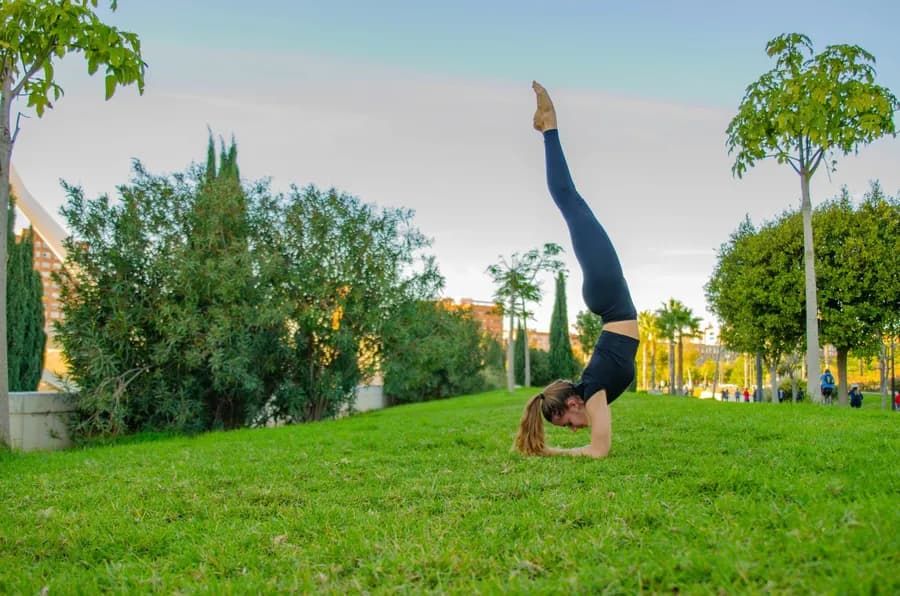
Pincha Mayurasana (Forearm Stand): Steps and Strength Benefits
Practice Pincha Mayurasana with Habuild. Follow forearm stand steps to build shoulder strength, improve balance, and advance your yoga practice. Start today!

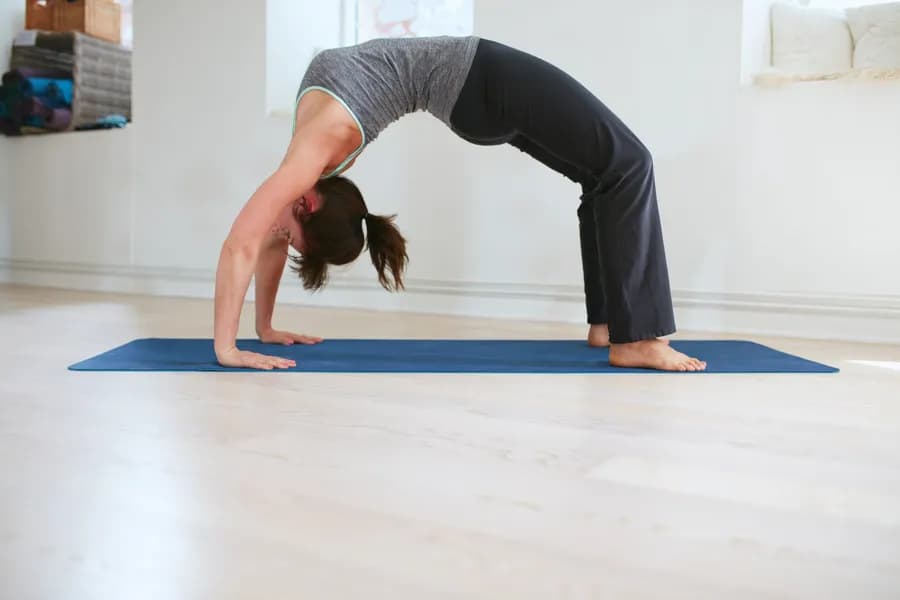
Urdhva Dhanurasana (Upward Bow Pose): Steps Benefits and Safety
Practice Urdhva Dhanurasana with Habuild. Follow the wheel pose steps to open your chest, strengthen your spine, and improve full-body flexibility. Start today!
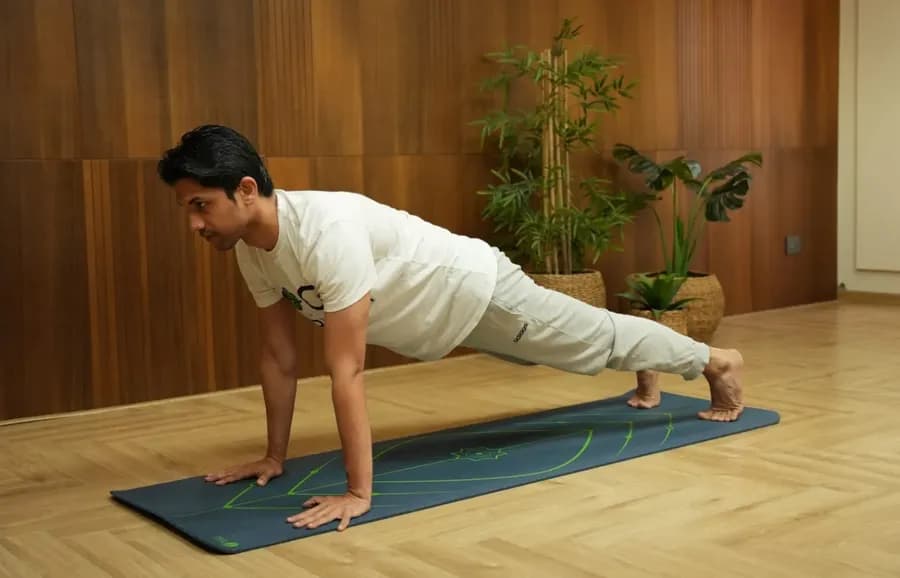
Adho Mukha Svanasana — The Downward-Facing Dog Pose
Adho Mukha Svanasana, universally known as Downward-Facing Dog, is one of yoga's most iconic and versatile postures.
