
Parivrtta Trikonasana (Revolved Triangle): Steps and Key Benefits
Practice Parivrtta Trikonasana with Habuild. Follow the revolved triangle steps to improve digestion, boost flexibility, and build core strength. Start today!
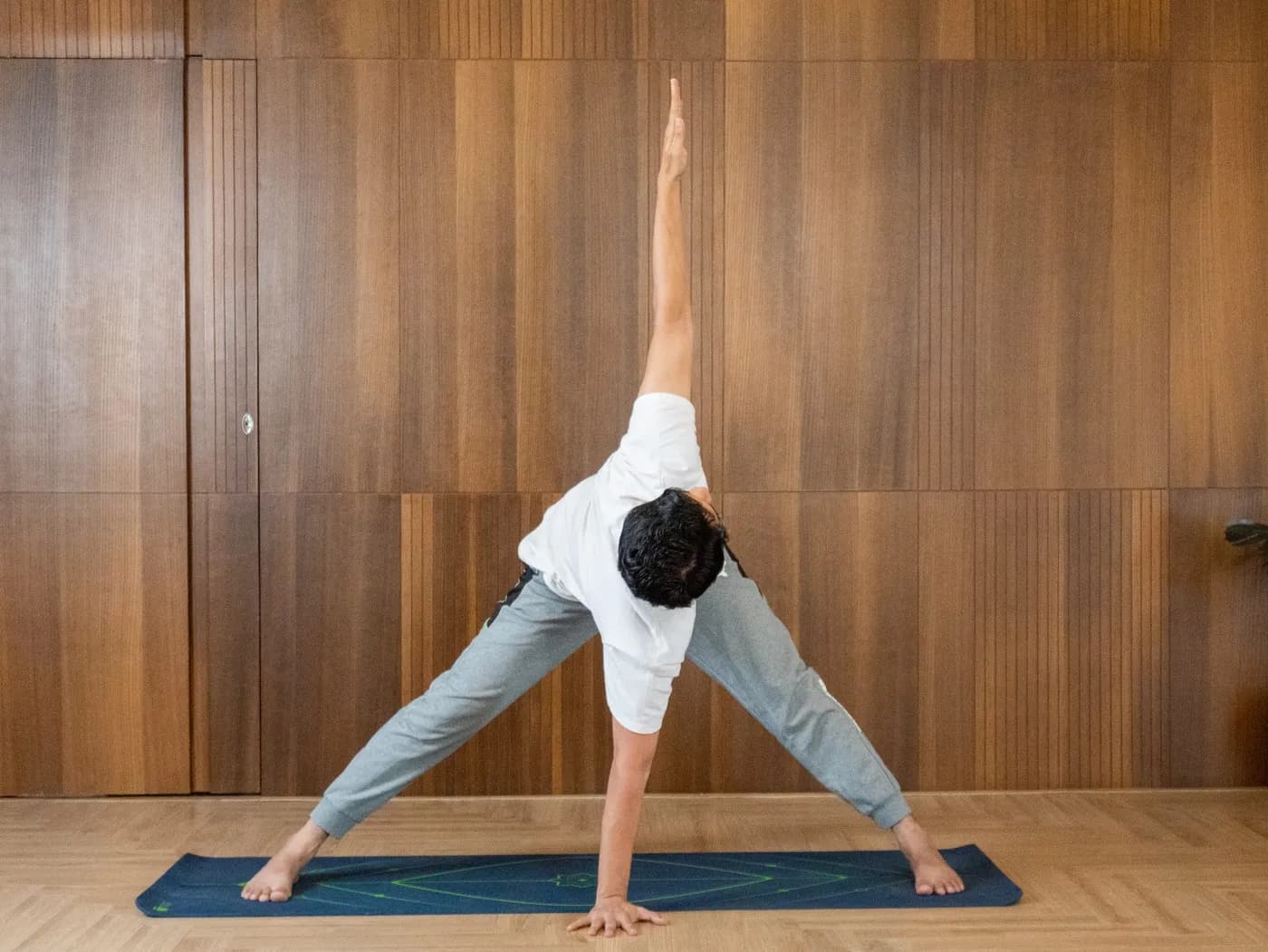
Key Takeaways
- Is the rotated counterpart of Triangle Pose, adding a full spinal twist to the same stance.
- Combines standing balance, hamstring stretch, spinal twist, and chest opening simultaneously.
- Requires hamstring flexibility, hip stability, and thoracic rotation built up sequentially first.
- The twist’s compression-release mechanism is used specifically to relieve acidity and gas.
- A head-below-heart inversion combined with rotation produces a distinct energising effect.
- Total present-moment absorption is named one of its most powerful mental training benefits.
Parivrtta Trikonasana, or Revolved Triangle Pose, combines a wide-legged stance, deep hamstring stretch, full spinal twist, and chest opening to build thoracic mobility, stimulate digestion, strengthen the legs and core, and energise and improve focus. Suitable for intermediate practitioners with progressive block-supported development.
What is Parivrtta Trikonasana?
Parivrtta Trikonasana — known in English as Revolved Triangle Pose — derives from Sanskrit: Parivrtta (revolved or turned around), Trikona (triangle), and Asana (posture). It is the rotated counterpart of Trikonasana (Triangle Pose) — adding a full spinal twist to the wide-legged triangle stance, creating one of yoga’s most demanding combinations of balance, hamstring flexibility, and axial rotation.
Parivrtta Trikonasana is simultaneously a standing balance pose, a deep hamstring stretch, a spinal twist, and a chest opener. The combination of these four elements makes it one of the most therapeutically comprehensive standing poses in the yoga canon — with particular benefits for spinal mobility, digestion, and full-body flexibility.
At Habuild, Parivrtta Trikonasana is taught with progressive preparation — ensuring the hamstring flexibility, hip stability, and thoracic rotation required for safe practice are developed sequentially before the full rotated expression is attempted.
Parivrtta Trikonasana Benefits
Physical Benefits
- Develops Spinal Rotation and Thoracic Mobility Parivrtta Trikonasana requires and develops the full range of thoracic spinal rotation — the dimension of spinal mobility that most yoga sequences dominated by forward folds and backbends rarely address. Critical for long-term three-dimensional spinal health.
- Stimulates Digestion and Relieves Acidity and Gas The compression-and-release mechanism of the twist massages the abdominal organs — stimulating digestive enzyme production, improving gut motility, and providing relief from acidity and gas.
- Stretches the Hamstrings and Opens the Hips Bilaterally The wide-legged stance stretches the hamstrings of the front leg while the back hip receives an external rotation stretch — bilateral hip and hamstring work that builds the lower-body flexibility all deeper postures require.
- Strengthens the Legs, Core, and Back Muscles The grounded stance, active arms, and maintained rotation under load require sustained engagement of the quadriceps, glutes, core rotators, and thoracic extensors — elevating the metabolic demand and building full-body functional strength.
Mental Benefits
- Builds Focus and Balance Under Complexity Simultaneous attention to balance, rotation, alignment, and breath creates a meditative focus that silences mental chatter completely — total present-moment absorption is one of the most powerful mental training benefits the pose offers.
- Energises and Creates Mental Clarity The combination of head-below-heart inversion, full-body engagement, and rotation produces a distinctive energetic quality — the body feels fully alive and the mind unusually clear after Parivrtta Trikonasana.
How to Do Parivrtta Trikonasana — Step-by-Step Instructions
Key Principles
Key Principles Three principles: establish the triangle before the rotation — find the correct stance and hamstring engagement of Trikonasana before attempting the twist; lengthen before rotating — inhale to create maximum spinal length before the exhale-driven rotation; and keep the back hip from opening — the tendency of the back hip to swing open to allow the rotation is the most common alignment error.
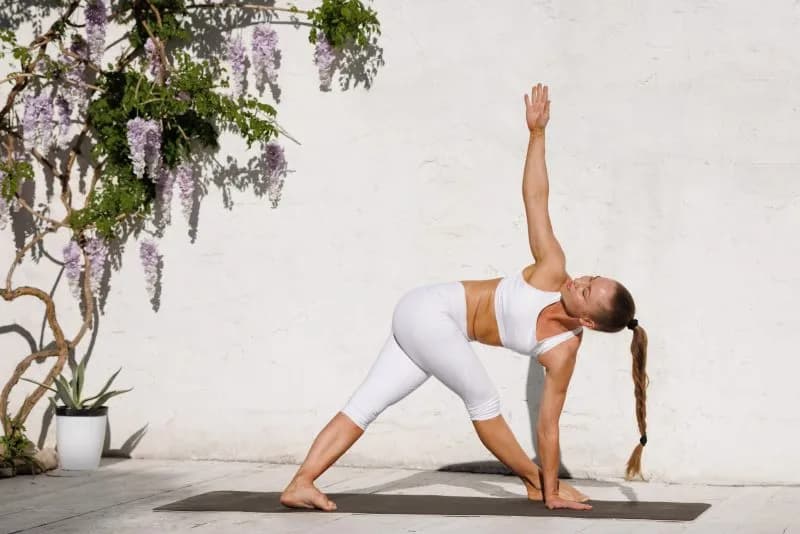
Parivrtta Trikonasana — Step by Step Step 1: Wide-Legged Starting Position Begin in Tadasana. Step the feet three to three and a half feet apart, parallel. Extend both arms to the sides at shoulder height.
Step 2: Turn the Right Foot Out Turn the right foot out 90 degrees and the left foot in 45–60 degrees. Square the hips toward the right as much as possible.
Step 3: Lengthen the Spine on Inhalation Inhale to lengthen the spine to maximum height. This inhalation creates the axial traction that makes the subsequent rotation safe and beneficial.
Step 4: Hinge and Begin the Rotation On the exhale, hinge forward from the hip over the right leg. Extend the left arm toward the right foot and the right arm upward — rotating the torso to the right.
Step 5: Hand to Block and Chest Opens Place the left hand on a block outside the right foot (at appropriate height), keeping the spine long rather than rounded. Extend the right arm toward the ceiling, opening the chest to the right.
Step 6: Hold, Then Rise and Switch Sides Turn the gaze to the raised hand if comfortable. Hold for five to eight breath cycles, deepening the rotation slightly with each exhale. Inhale to rise. Repeat on the left side.
Breathing
Inhale to create spinal length and stability; exhale to deepen the rotation. Breathing into the back of the ribcage on the inhale creates the expansion that allows the rotation to deepen on the exhale.
Preparatory Poses
- Trikonasana (5 breaths each side) — The non-rotated triangle that warms the hamstrings and lateral hip before the twist is added.
- Ardha Matsyendrasana (both sides) — Warms the thoracic rotation range required for the full standing Parivrtta.
- Paschimottanasana (2 minutes) — Warms the hamstrings bilaterally before the asymmetric standing demand.
Variations
- Variation 1: Parivrtta Trikonasana with Block — Beginner-Intermediate A block at its highest height outside the front foot allows correct spinal length and rotation without requiring the hamstring flexibility for floor contact. The recommended starting form.
- Variation 2: Parivrtta Trikonasana to Floor — Advanced The lower hand placed flat on the floor outside the front foot — the full expression requiring significant hamstring flexibility and thoracic rotation range.
- Variation 3: Parivrtta Trikonasana with Bind — Expert The lower arm wraps around the front leg, clasping the upper arm behind the back — adding a shoulder and chest opener simultaneously with the deep twist.
Common Mistakes to Avoid
- Rounding the Lower Back to Reach the Floor Always use a block and prioritise spinal length — a long-spined block-supported rotation produces far greater thoracic mobility improvement than a rounded-back floor reach.
- Back Hip Swinging Open The back hip opening to allow the rotation eliminates the therapeutic twist. Actively draw the back hip forward throughout — the hip constraint creates the genuine rotational demand.
- Looking Down Rather Than Rotating the Gaze Upward The upward gaze is part of the thoracic rotation — without it, the cervical spine is excluded from the rotation and the complete chest-opening quality of the pose is not achieved.
Who Should Practise?
- Those with Digestive Issues The comprehensive abdominal organ massage of the standing twist makes Parivrtta Trikonasana among the most effective standing postures for digestive health — addressing acidity, gas, and constipation simultaneously.
- Practitioners Building Three-Dimensional Spinal Health The thoracic rotation work is irreplaceable for anyone seeking to maintain or restore the full rotational range that ageing and sedentary lifestyles progressively erode.
- Is Parivrtta Trikonasana Good for Beginners? The block-supported form on a shorter stance is accessible to practitioners who have established Trikonasana and standing twists comfortably. Building the full expression progressively over several weeks is the correct approach.
Make Parivrtta Trikonasana a Part of Your Daily Practice
Parivrtta Trikonasana is the yoga tradition’s most comprehensively beneficial revolved standing posture — its simultaneous hamstring stretching, thoracic rotation, digestive organ massage, and chest opening delivering the full three-dimensional spinal health that forward-dominant practice consistently leaves incomplete.
The most effective way to learn Parivrtta Trikonasana correctly — with block progression, back-hip awareness, and thoracic-led rotation — is under live expert instruction with Habuild.
Start your 14 day free yoga journey with Habuild, today!
Related reads: Parivrtta Trikonasana Benefits: Steps, Variations & Guide · Trikonasana (Triangle Pose): Steps Benefits and Alignment Tips
The twist in Parivrtta Trikonasana massages the abdominal organs each time you hold it, and it’s the accumulation of those sessions — not one well-executed pose — that tends to show up as smoother digestion and a stronger core. Beginners often rush the twist; a guided routine helps keep the alignment safe while the benefits build. That’s exactly the structure Habuild’s Yoga Everyday program offers, pairing this revolved triangle with poses that reinforce the same core and digestive benefits.
Frequently Asked Questions
Related Articles
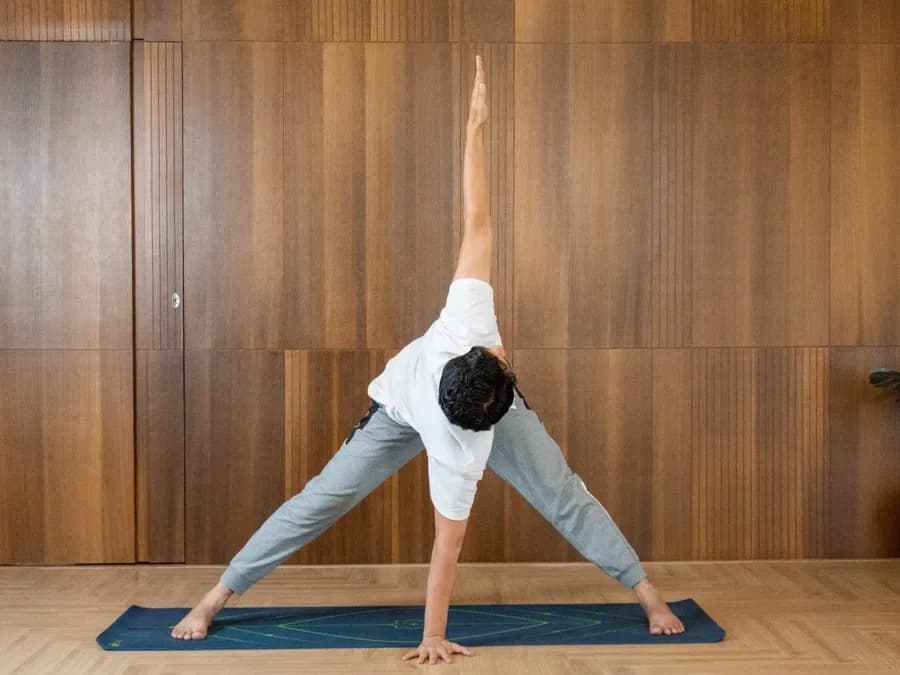
Trikonasana: Triangle Yoga Pose, Steps & Benefits
Trikonasana, the Triangle Pose, opens the hips, lengthens the lateral body, strengthens the legs and core, and improves spinal alignment in one complete standing pose.

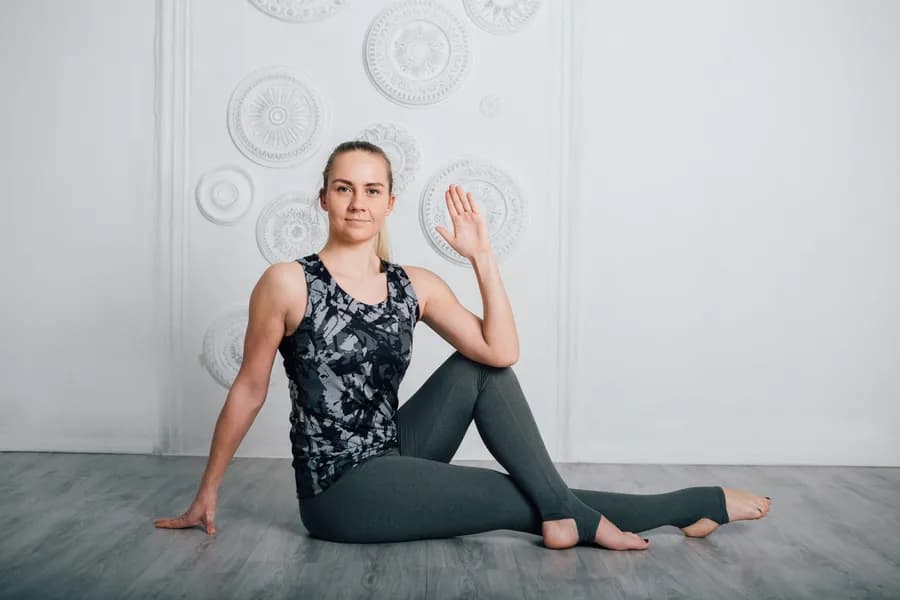
Matsyendrasana (Full Spinal Twist): Steps Benefits and Safety
Practice matsyendrasana with Habuild. Follow the ardha matsyendrasana procedure to boost spinal health, digestion, and flexibility. Start your session today!
Supta Matsyendrasana (Supine Spinal Twist): Steps and Benefits
Practice Supta Matsyendrasana with Habuild. Follow supine spinal twist steps to relieve back pain, improve digestion, and calm your nervous system. Start today!
Konasana (Angle Pose): Steps Benefits and Spine Health
Practice konasana with Habuild. Follow the steps of trikonasana to strengthen your legs, improve flexibility, and boost your lateral body stretch. Start today!
Ardha Matsyendrasana: Steps Benefits and How to Practice v2
Learn ardha matsyendrasana with Habuild. Discover ardha matsyendrasana benefits for spinal health, improved digestion, and flexibility. Start your practice now!
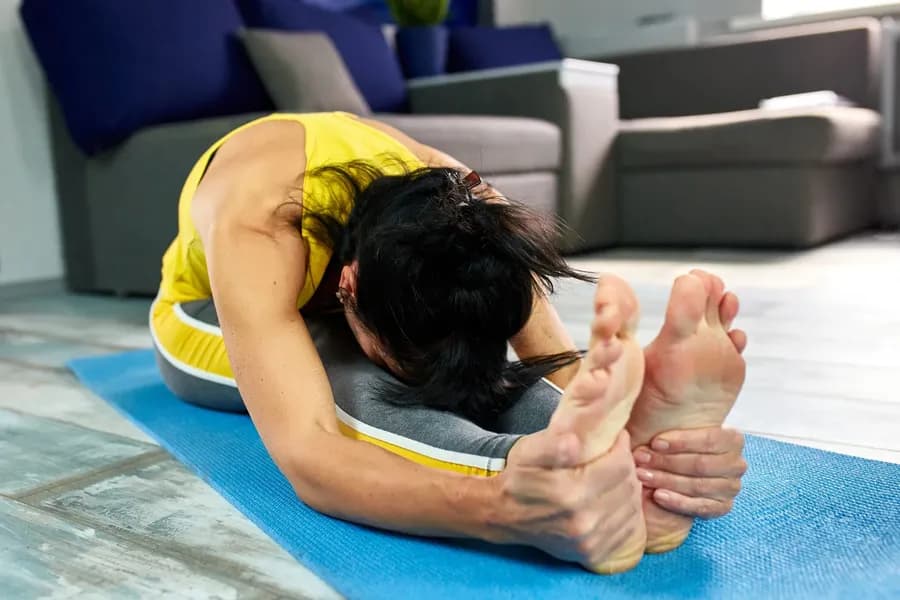
Paschimottanasana: Yoga Steps, Benefits & Tips
Paschimottanasana, the Seated Forward Fold, deeply stretches the entire posterior chain, stimulates the abdominal organs, calms the nervous system, and builds hamstring and spinal flexibility.