
Virabhadrasana (Warrior Poses): Complete Guide to Steps and Benefits
Practice Virabhadrasana with Habuild. Follow the warrior pose steps to build leg strength, boost flexibility, and develop stamina and mental focus. Start today!
Key Takeaways
- Named after Virabhadra, the powerful legendary warrior created by Lord Shiva.
- Warrior I’s compound leg-core-arm demand makes it one of yoga’s highest metabolic standing poses.
- Warrior II adds lateral hip and groin opening that complements Warrior I’s forward stretch.
- Every session addresses five common alignment errors specific to the full three-pose series.
- Sustained isometric front-leg loading builds quadriceps, hamstring, glute, and calf strength.
- The three-pose series together delivers yoga’s most comprehensive standing balance training.
Virabhadrasana, or Warrior Pose, is a series of three standing postures — Warrior I, II, and III — building lower-body strength, stretching the hip flexors, strengthening the core, and cultivating focused warrior presence. Together they provide the most comprehensive standing strength, flexibility, and balance development in yoga, suitable for all fitness levels.
What is Virabhadrasana?
Virabhadrasana — known in English as Warrior Pose — takes its name from the legendary warrior Virabhadra, a powerful being created by Lord Shiva. The Virabhadrasana series comprises three distinct warrior postures — Virabhadrasana 1 (Warrior I), Virabhadrasana 2 (Warrior II), and Virabhadrasana 3 (Warrior III) — each embodying a different aspect of the warrior’s stance and providing distinct physical and mental training.
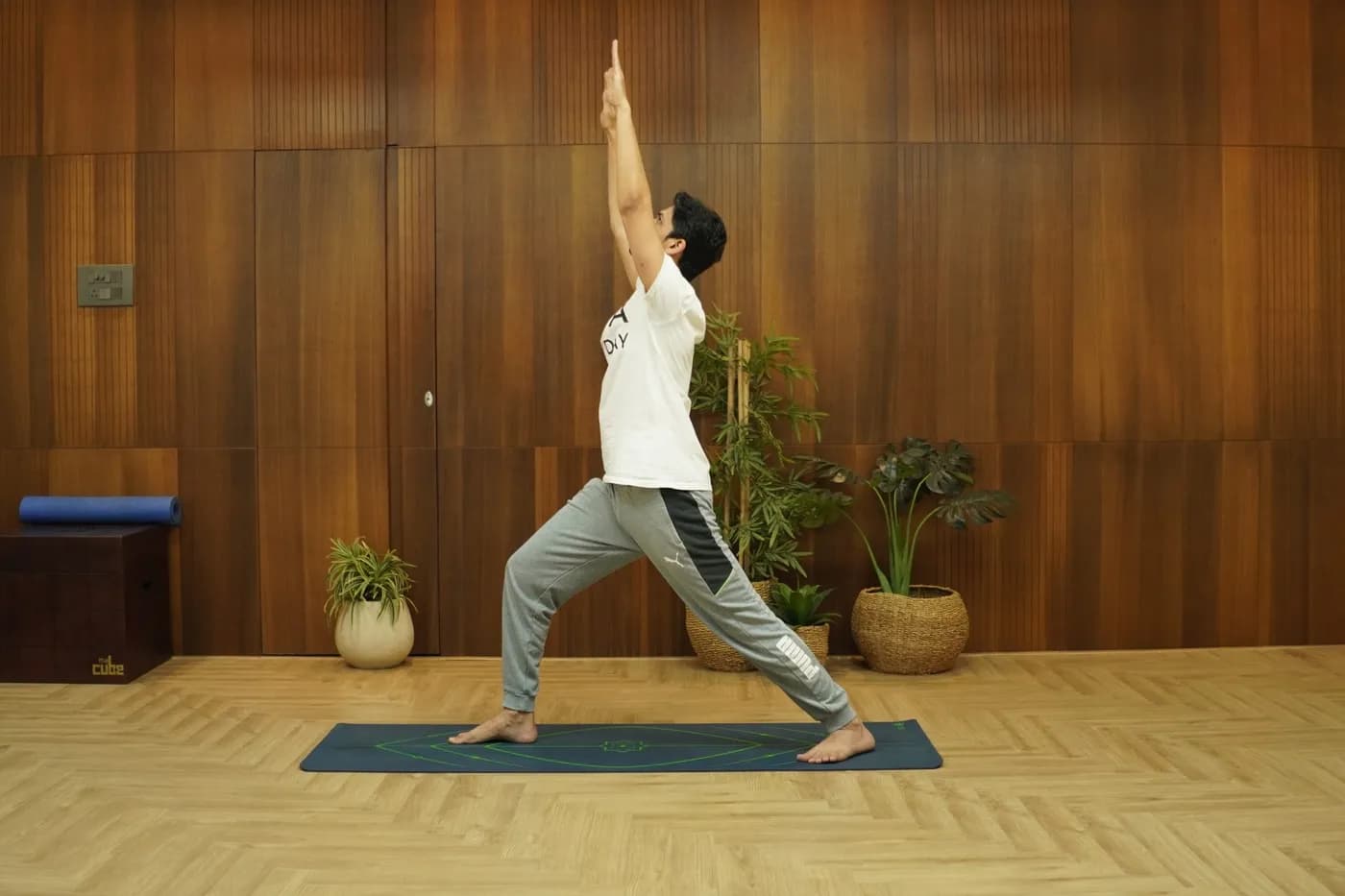
Virabhadrasana 1 is the forward-facing warrior — hips squared toward the front foot, front knee at 90 degrees, both arms raising powerfully overhead. Its primary therapeutic focus is the deep hip flexor and psoas opening of the squared-hip back-leg stretch alongside lower body strengthening. For practitioners focused on weight management, the compound leg-core-arm demand provides one of the highest metabolic standing postures in yoga.
At Habuild, the full Virabhadrasana series — I, II, and III — is taught in every session as a comprehensive warrior development sequence, with each form’s specific alignment demands given detailed live attention and the five most common errors addressed in real time for every member.
Virabhadrasana Benefits
Physical Benefits
- Builds Complete Lower Body and Posterior Chain Strength Virabhadrasana loads the quadriceps, hamstrings, glutes, and calves of the front leg under sustained isometric tension — building the functional lower body strength that supports the knee, stabilises the pelvis, and underpins all athletic activities. This posterior chain development directly protects against lower back pain by building the hip and glute strength that reduces lumbar load.
- Stretches the Hip Flexors and Opens the Anterior Body The back-leg extension in Virabhadrasana 1 provides a deep hip flexor and psoas stretch — counteracting the chronic shortening from desk work and prolonged sitting. Virabhadrasana 2 provides the lateral hip and groin opening. Together, the two Warriors provide comprehensive anterior hip opening in both the forward and lateral planes.
- Supports Weight Management Through Compound Metabolic Demand The compound lower-body, core, and upper-body engagement of the Warrior series — particularly in sustained multi-round sequences — elevates metabolic demand, builds lean muscle mass, and supports healthy body composition goals over consistent practice.
- Develops Core Stability and Postural Integrity Maintaining the upright, squared torso throughout Virabhadrasana requires sustained engagement of the obliques, transverse abdominis, and spinal erectors — building the postural core strength that counters the rounded-shoulder forward-head posture of desk-dominated life.
Mental and Emotional Benefits
- Cultivates Warrior Qualities — Focused Presence and Grounded Strength The Virabhadrasana series is a deliberate embodiment practice — the warrior’s qualities of focused attention, fearless forward momentum, and grounded strength cultivated through sustained physical expression. The gaze, the arm reach, the rooted legs are not merely alignment but the physical expression of the warrior archetype.
- Builds Mental Toughness Through Sustained Discomfort Sustained Warrior holds develop the mental resilience of staying present and composed when the impulse is to release — one of yoga’s most direct training grounds for the quality of determined composure that challenging life situations demand.
How to Do Virabhadrasana — Step-by-Step Instructions
Key Principles
Key Principles for All Three Warriors Four principles apply across all three forms: front knee tracks over the front foot — never collapsing inward; spine lifts tall — torso vertical, not leaning; the appropriate hip action for each form — square for Warrior I, open for Warrior II, level for Warrior III; and arms reach actively — extending with intention throughout.
Virabhadrasana 1 — Step by Step Step 1: Wide Stance with Foot Positions Step the left foot back three to three-and-a-half feet, turning it to 45 degrees. Right foot points directly forward. Both feet press firmly into the floor.
Step 2: Square the Hips Forward Draw the left hip actively toward the right — squaring the pelvis toward the front. This hip-squaring action is the defining element of Warrior I. Feel the left hip flexor and psoas opening.
Step 3: Front Knee to 90 Degrees and Arms Overhead Exhale and bend the front knee to 90 degrees — directly above the ankle. Inhale and raise both arms overhead. Hold for five to ten breaths, breathing to expand the chest.
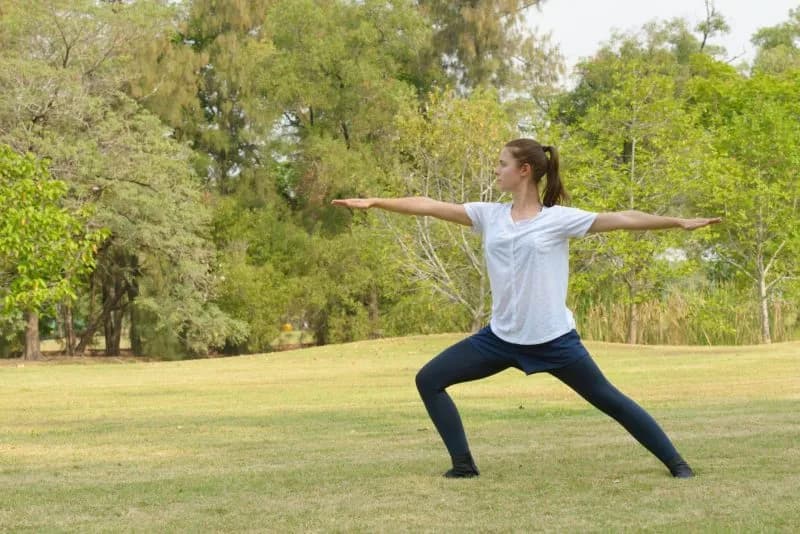
Step 4: Transition to Virabhadrasana 2 — Open the Hips From Warrior I, exhale and open the arms out laterally — the left arm back, the right arm forward. Simultaneously allow the hips to open fully to the left. The body now faces the long side of the mat.
Step 5: Virabhadrasana 2 — Arms and Gaze Arms extend at shoulder height — right arm forward, left arm back, palms facing down. Gaze over the right hand. Hips fully open to the left. Hold for five to eight breaths.
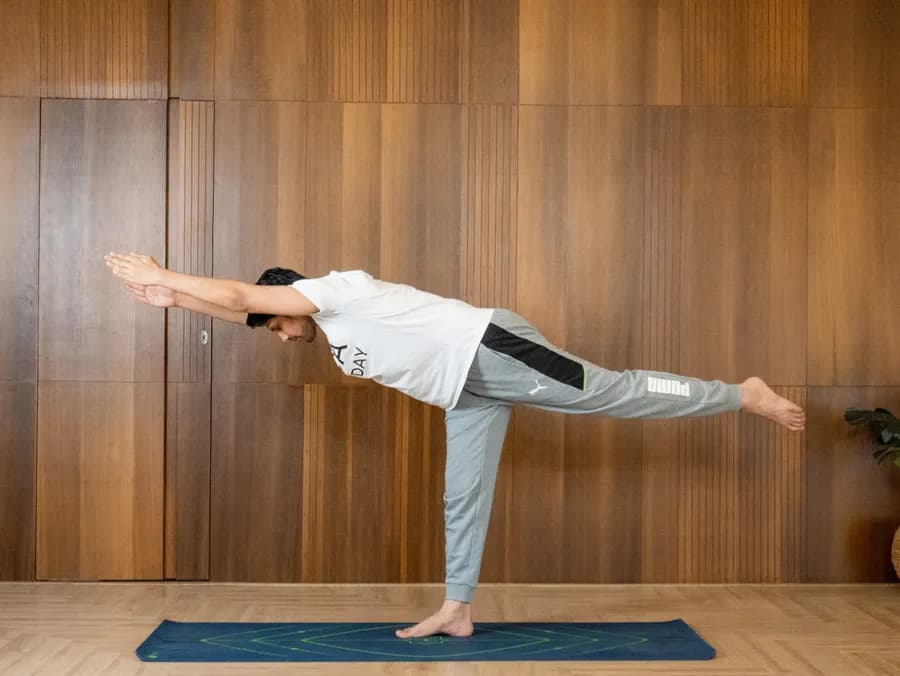
Step 6: Virabhadrasana 3 — The Balance Warrior From Warrior I, hinge forward from the hips as the back leg lifts — torso and back leg eventually parallel to the floor, arms extending forward. One-legged balance with full posterior chain engagement. Hold for three to five breaths.
Breathing in the Virabhadrasana Series
Inhale to create length and lift throughout all three forms; exhale to deepen the stance. The breath is the mechanism of progressive deepening — not muscular forcing. In Warrior III, the breath also serves as the balance regulator, slow full breaths reducing the compensatory muscular tension that destabilises balance.
Preparatory Poses Before Virabhadrasana
These poses warm the hip flexors, lower body, and lateral body before the Warrior series.
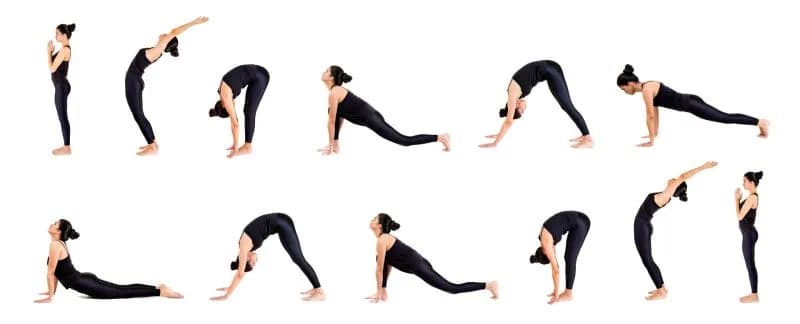
- Surya Namaskara (3-5 rounds) — The standard preparation for all standing postures.
- Anjaneyasana (Low Lunge, 60 seconds each side) — Directly warms the hip flexors before the Warrior I psoas opening.
- Baddha Konasana (60 seconds) — Opens the inner thighs and groin before the lateral hip opening of Warrior II.
The Three Warriors — Differences and Applications
- Virabhadrasana 1 — Forward-Facing Warrior
- Hips squared toward the front foot, arms overhead — the deepest hip flexor and psoas opening of the three. The most demanding for hip squaring and anterior body opening. Primary therapeutic focus: hip flexor stretch and standing strength.
- Virabhadrasana 2 — Lateral-Opening Warrior
- Body opens laterally, arms extend to the sides, gaze over the front hand — hips fully open. Primary therapeutic focus: lateral hip and groin opening, and lateral body strength. Less demanding for hip flexor flexibility than Warrior I; more demanding for lateral hip opening.
- Virabhadrasana 3 — Balance Warrior
- One-leg balance with torso and back leg parallel to the floor, arms forward — the most challenging balance demand of the three. Primary therapeutic focus: posterior chain strengthening, single-leg stability, and core integration in the balance position.
Common Mistakes to Avoid in Virabhadrasana
- Losing the Hip Square in Warrior I When the back hip opens outward rather than drawing forward, the hip square is lost — and with it, the deep psoas stretch that makes Warrior I therapeutically superior to a simple lunge. The hip-squaring action must be actively maintained in every Warrior I repetition.
- Front Knee Collapsing Inward in All Three Warriors The front knee must track actively over the second or third toe in Warrior I and II, and the standing leg must maintain the same tracking in Warrior III. Inward collapse in any Warrior form concentrates medial knee strain and reduces the hip stability that the posture is designed to build.
- Arms Dropping in Warrior I and III The arms must reach actively throughout Warrior I (overhead) and Warrior III (forward) — not merely held passively in position. The active arm reach engages the shoulder stabilisers, opens the chest, and provides the energetic expression of the warrior archetype that is part of the posture’s psychological function.
Who Should Practise Virabhadrasana?
- Beginners Building a Complete Yoga Foundation The Virabhadrasana series is the standing posture foundation of all yoga — providing lower body strength, anterior body opening, lateral body flexibility, and single-leg balance in a three-posture sequence that belongs in every yoga practice from the beginning.
- Those Seeking Functional Strength and Weight Management The compound standing demand of the Warrior series — particularly in sustained multi-round sequences — makes it one of the most metabolically efficient yoga sequences for building functional strength and supporting healthy weight management.
- Is Virabhadrasana Good for Beginners? Yes — all three Warriors have accessible modifications: Crescent Lunge (back knee down) for Warrior I; forearm-on-thigh for Warrior II; and hands on a wall for Warrior III. The complete series becomes progressively more accessible as hip flexor flexibility and leg strength develop.
Make Virabhadrasana a Part of Your Daily Practice
The Virabhadrasana series is the yoga tradition’s most comprehensive standing warrior practice — Warrior I building the hip flexor opening and forward strength, Warrior II developing the lateral body power and groin opening, and Warrior III developing the single-leg balance and posterior chain integration that all three forms together provide.
Practising all three Warriors daily — even one round of thirty to forty-five seconds per side — produces meaningful lower body strength, hip flexibility, and postural improvements within two to three weeks that compound into significant physical transformation over months.
The most effective way to learn the complete Virabhadrasana series correctly — with hip-squaring guidance, knee-tracking instruction, and all three Warriors taught in every session — is under live expert instruction with Habuild.
Start your 14 day free yoga journey with Habuild, today!
Related reads: Virabhadrasana 1 (Warrior 1): Steps Benefits and Alignment Cues · Virabhadrasana 2 (Warrior 2): Steps Benefits and Alignment Cues
The Warrior poses ask for strength, hip flexibility, and steady focus all at once, and each of those three improves at a different pace — legs strengthen fastest, hips loosen slowest, and mental focus tends to land somewhere in between, all through repetition. Cycling through the Warrior variations regularly, rather than picking a favorite and sticking only to that one, is what builds the fuller set of benefits. Habuild’s Yoga Everyday program works through these variations as part of its standing-pose sequences.
Frequently Asked Questions
Related Articles
Virabhadrasana 3 (Warrior 3): Steps Balance and Core Benefits
Practice Virabhadrasana 3 with Habuild. Follow Warrior III steps to improve balance, build leg strength, and develop core stability and focus. Start today!
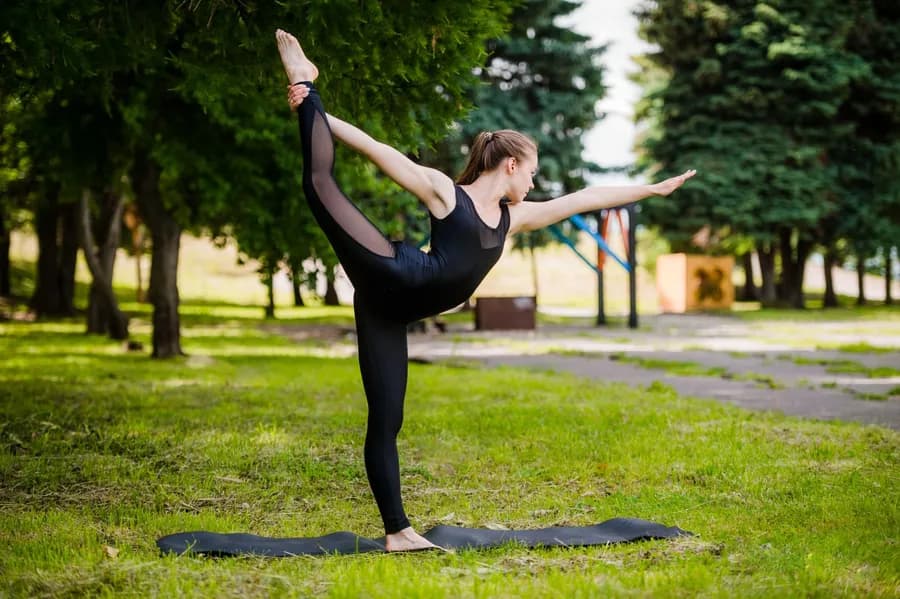
Natarajasana (Dancer Pose): Steps and Balance Benefits
Practice Natraj Asana with Habuild. Follow Lord of the Dance pose steps to improve balance, boost flexibility, and strengthen your spine daily. Start today!
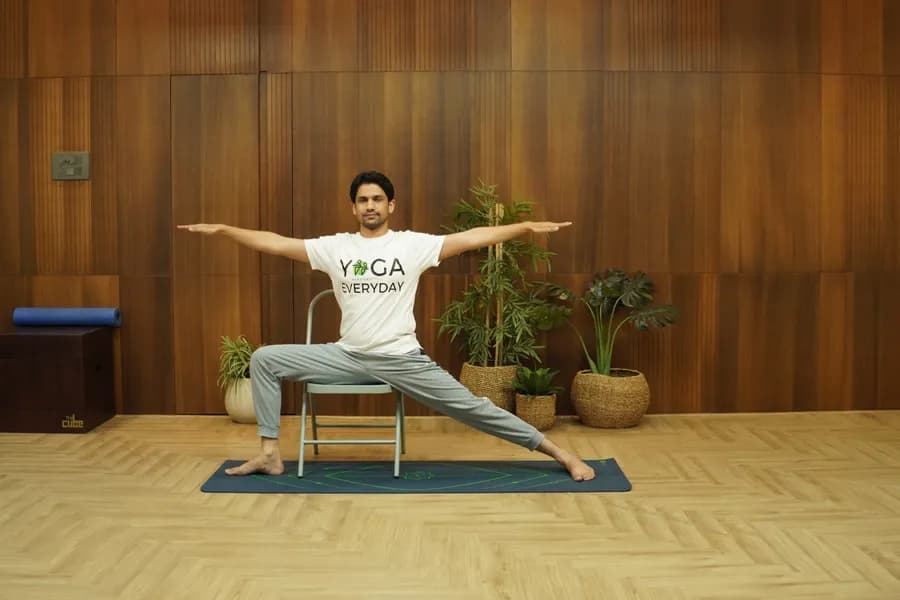
Virabhadrasana 2 (Warrior 2): Steps Benefits and Alignment Cues
Practice Virabhadrasana 2 with Habuild. Follow the Warrior II pose steps to strengthen your legs, open your hips, and build stamina and focus. Start today!
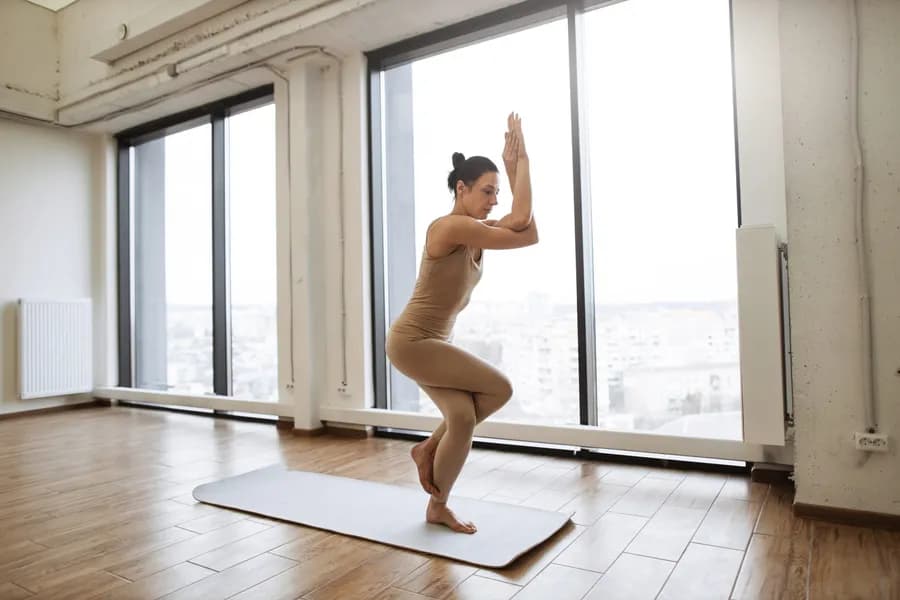
Garudasana (Eagle Pose): Steps Balance Benefits and Beginner Tips
Practice garudasana with Habuild. Try garudasana yoga to improve balance, strengthen your legs, open your shoulders, and develop sharp focus. Start today now!
Utkatasana (Chair Pose): Steps Strength and Stamina Benefits
Practice utkatasana with Habuild. Try the utkatasana pose to strengthen your legs, build core power, and boost overall body endurance. Start your yoga session!
Trikonasana: Triangle Yoga Pose, Steps & Benefits
Trikonasana, the Triangle Pose, opens the hips, lengthens the lateral body, strengthens the legs and core, and improves spinal alignment in one complete standing pose.