
Ardha Uttanasana (Half Forward Fold): Steps and Posture Benefits
Practice Ardha Uttanasana with Habuild. Follow the half forward fold steps to lengthen your spine, strengthen your back, and improve your posture. Start today!
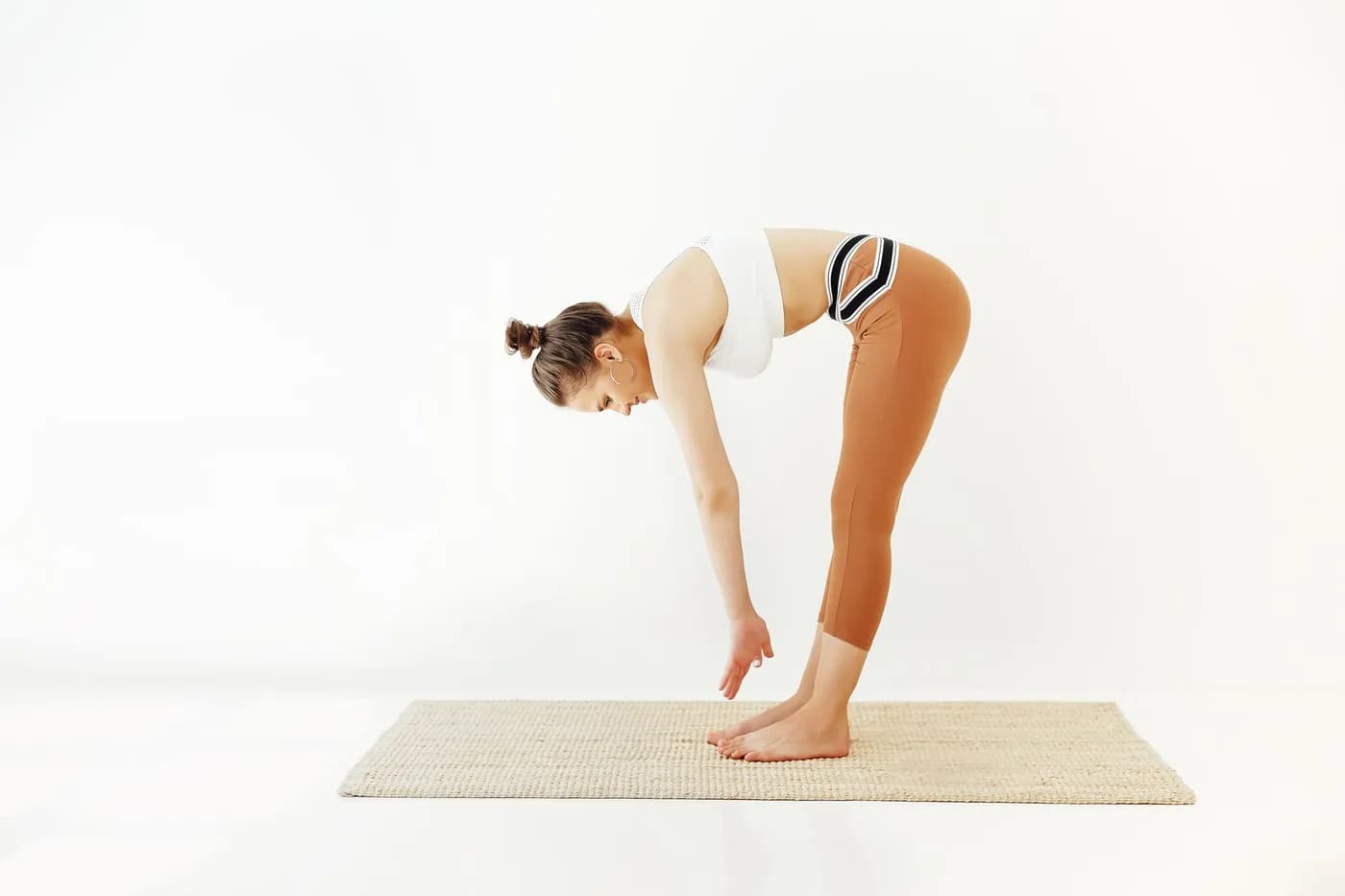
Key Takeaways
- Appears in every single round of Surya Namaskara despite being a purely transitional pose.
- Provides an active hamstring stretch, unlike the passive stretch of the full forward fold.
- Develops the hip-hinge pattern that distinguishes safe daily bending from disc-stressing bending.
- Named the posture most commonly practised mindlessly despite its real therapeutic value.
- Requires the spine to stay flat and parallel to the floor, neither rounded nor hyperextended.
- The intra-abdominal pressure shift is said to stimulate digestion during the Sun Salutation.
Ardha Uttanasana, or Half Forward Fold, strengthens the spinal extensors, provides an active hamstring stretch, and develops the hip-hinge movement pattern essential for safe yoga and all daily bending. It is a key transitional posture in Surya Namaskara — deserving deliberate attention as a standalone therapeutic posture. Suitable for all fitness levels.
What is Ardha Uttanasana?
Ardha Uttanasana — known in English as Half Forward Fold, Half Standing Forward Bend, or Standing Half Lift — derives from Sanskrit: Ardha (half), Ut (intense), Tan (to stretch), and Asana (posture). The torso rises to the halfway point of the full forward fold — spine parallel to the floor, back flat, hands on the floor, shins, or blocks.
Ardha Uttanasana is one of the most frequently practised postures in yoga — appearing in every round of Surya Namaskara. Despite its transitional role, it actively strengthens the spinal extensors, provides a load-bearing hamstring stretch, develops the hip-hinge movement pattern, and builds the postural awareness that distinguishes a safe yoga practice from one that accumulates disc stress.
At Habuild, Ardha Uttanasana receives the same careful alignment instruction as any standalone posture — the hip-hinge mechanics, spinal neutrality, and active back extensor engagement taught explicitly in every Surya Namaskara session.
Benefits
Physical Benefits
- Strengthens the Spinal Extensors and Prevents Back Pain The active maintenance of a flat, horizontal spine requires sustained engagement of the erector spinae, multifidus, and thoracic extensors against gravity — building the posterior chain strength that is the primary defence against chronic lower back dysfunction.
- Provides an Active Hamstring Stretch Unlike the passive hamstring stretch of the full forward fold, Ardha Uttanasana provides an active hamstring stretch — the hamstrings lengthen under gravitational load while the back extensors simultaneously work to maintain position. This produces more functional and durable flexibility improvements.
- Develops Hip-Hinge Movement Pattern The hip-hinge demanded by Ardha Uttanasana — folding and rising from the hip joint rather than the lumbar vertebrae — is the foundational movement pattern of safe yoga and safe daily movement.
- Stimulates Digestive Organs The abdominal lengthening and shift in intra-abdominal pressure stimulates the digestive organs and improves mesenteric circulation within the Surya Namaskara sequence.
Mental Benefits
- Develops Mindful Transition Awareness Ardha Uttanasana is the most commonly practised mindlessly. Bringing deliberate attention to the pose — feeling the spine lengthen, the hamstrings engage, the breath move — transforms the entire Surya Namaskara from mechanical movement into genuine moving meditation.
How to Do Ardha Uttanasana — Step-by-Step Instructions
Key Principles
Key Principles Three principles: hinge from the hips, not the waist; maintain spinal neutrality — neither hyperextended nor rounded, parallel to the floor; and actively engage the back extensors — this is not a passive hang but an active back-strengthening position.
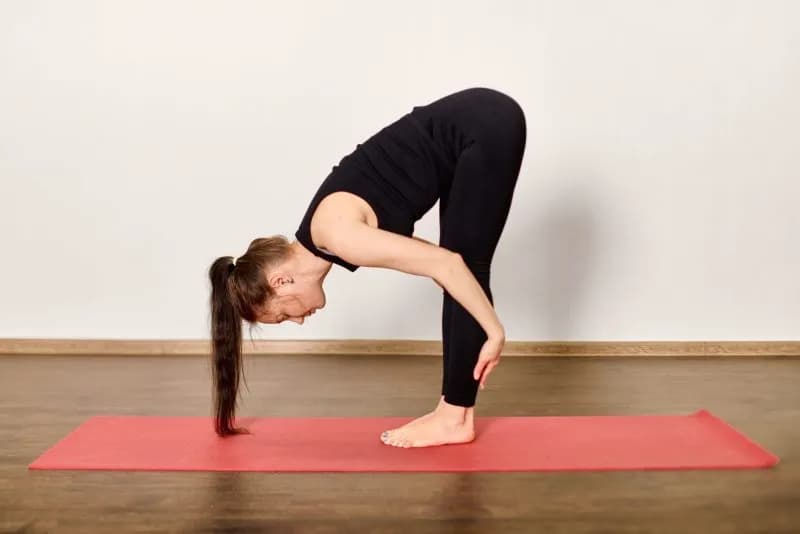
Ardha Uttanasana — Step by Step Step 1: Begin in Uttanasana Begin in Uttanasana (full forward fold), hands on the floor or shins, knees bent as needed. This is the starting position for the half lift.
Step 2: Inhale and Lift the Torso Halfway On the inhale, press the fingertips into the floor and lift the torso halfway — bringing the spine toward parallel to the floor.
Step 3: Hands to Floor, Shins, or Blocks Place the fingertips on the floor beside the feet, on the shins, or on blocks — whichever height allows a genuinely flat back. Never sacrifice spinal neutrality to reach the floor.
Step 4: Retract the Shoulder Blades Draw the shoulder blades toward each other and down — opening the chest forward and widening the collarbones. The gaze rests on the floor slightly in front of the feet.
Step 5: Engage the Quadriceps Actively engage the quadriceps to protect the knees and deepen the active hamstring stretch — the standing leg should feel strong and active, not passive.
Step 6: Hold or Transition Hold for 2–5 breath cycles for standalone practice. For Surya Namaskara: use as the deliberate inhale transition, then exhale to fold back into Uttanasana or step back into lunge.
Breathing
Ardha Uttanasana is always an inhale posture in Surya Namaskara — the expansion of the chest and lengthening of the spine that the inhale creates are precisely what the pose requires. In standalone practice, breathe into the back body — the posterior ribcage expanding on the inhale.
Preparatory Poses
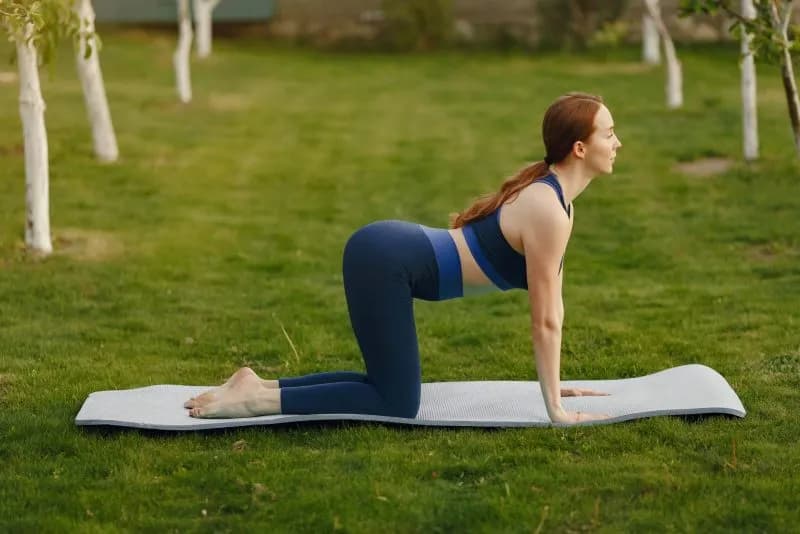
- Marjariasana-Bitilasana (Cat-Cow) — Warms the spinal extensors and establishes the awareness of spinal neutrality.
- Setu Bandhasana (Bridge Pose) — Activates the posterior chain in the supine position before the standing demand.
Variations
- Variation 1: Hands on Shins — Beginner For practitioners with tight hamstrings — placing hands on the shins rather than the floor allows the back to remain flat. Flat back is always the priority.
- Variation 2: Fingertips on Blocks — Standard Modification Blocks at the appropriate height raise the floor to meet the hands — making a flat-back Ardha Uttanasana accessible regardless of hamstring flexibility.
- Variation 3: Arms Extending Forward — Advanced Arms extending forward alongside the ears creates a longer lever, greater posterior chain engagement — bridging Ardha Uttanasana with Virabhadrasana 3.
Common Mistakes to Avoid
- Rounding the Back to Touch the Floor Always use blocks. A rounded back in Ardha Uttanasana stresses the lumbar disc — the flat back is the entire therapeutic point of the posture.
- Rushing Through as a Transition The quality of every Ardha Uttanasana in every Surya Namaskara round determines whether the sequence builds functional spinal strength or accumulates disc stress.
- Looking Forward Aggressively The gaze rests on the floor ahead — not lifted to look forward. Looking aggressively forward shortens the posterior cervical muscles and creates neck compression.
Who Should Practise?
- All Yoga Practitioners Ardha Uttanasana appears in every Surya Namaskara and therefore in every yoga session. Correct execution is universally essential.
- Beginners Learning Safe Spinal Mechanics The hip-hinge pattern and flat-back discipline of Ardha Uttanasana is the single most important spinal safety skill in beginner yoga.
- Is Ardha Uttanasana Good for Beginners? Yes — the block modification makes it accessible from the first session. The hip-hinge mechanics it teaches are foundational for all yoga and all daily bending.
Make Ardha Uttanasana a Part of Your Practice
Ardha Uttanasana is the most frequently practised and most frequently neglected posture in yoga — its deliberate execution in every Surya Namaskara transition determining the quality and safety of the forward-fold dimension of the entire practice.
Whether using blocks to maintain a flat back or developing the full floor-touch with perfect spinal neutrality, every deliberate Ardha Uttanasana builds the posterior chain strength and hip-hinge awareness that protects the spine in all yoga and all daily movement.
The most effective way to learn Ardha Uttanasana correctly — with hip-hinge mechanics and block guidance in every session — is under live expert guidance with Habuild.
Start your 14 day free yoga journey with Habuild, today!
Related reads: Ardha Chakrasana (Half Wheel Pose): Steps & Benefits · Ardha Naukasana (Half Boat Pose): Steps, Benefits & Precautions
Half Forward Fold is often treated as a passing transition, but held with intention it lengthens the spine and reinforces the postural muscles along the back — improvements that show up only after it’s repeated regularly, not from a single pass through a sequence. Posture, in particular, is a slow-changing thing that responds far better to daily reinforcement than occasional correction. Habuild’s Yoga Everyday program uses this fold as one of several posture-focused poses in its daily flow.
Frequently Asked Questions
Related Articles
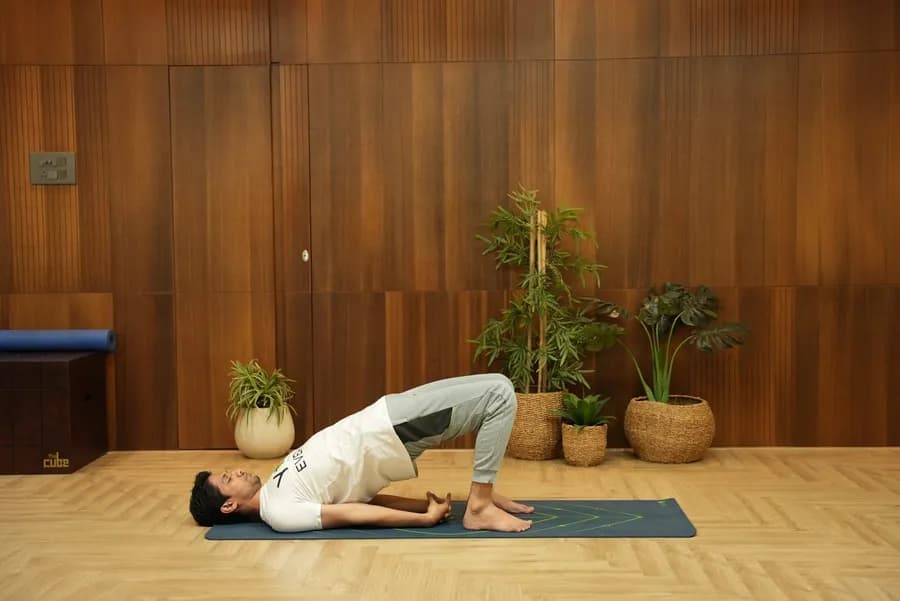
Setu Bandha Sarvangasana: Steps Benefits and Modifications
Practice Setu Bandha Sarvangasana with Habuild. Follow the bridge pose steps to strengthen your back, support thyroid health, and improve sleep. Start today!
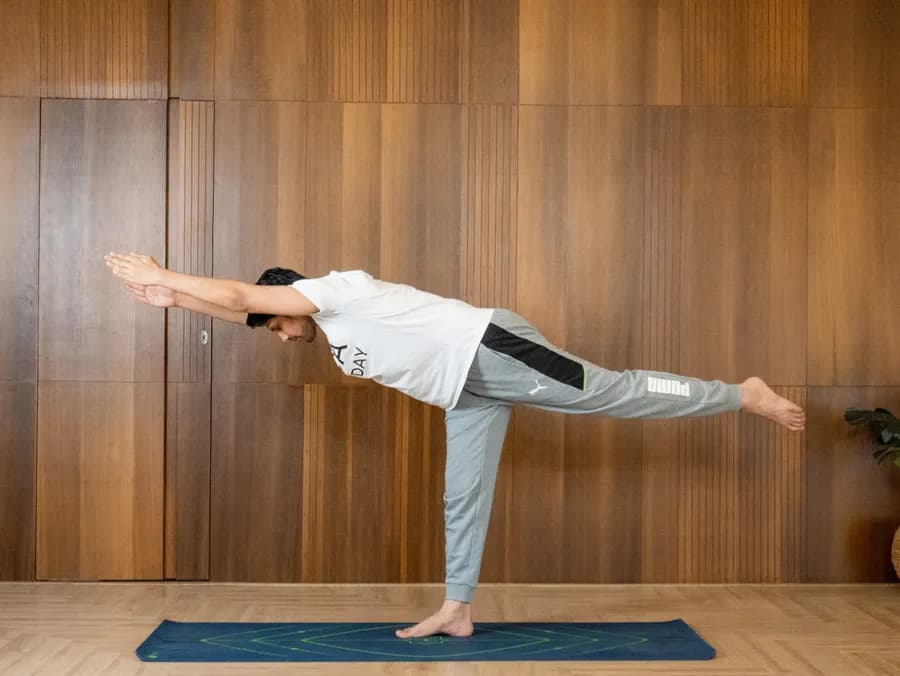
Virabhadrasana 3 (Warrior 3): Steps Balance and Core Benefits
Practice Virabhadrasana 3 with Habuild. Follow Warrior III steps to improve balance, build leg strength, and develop core stability and focus. Start today!
Paschimottanasana: Yoga Steps, Benefits & Tips
Paschimottanasana, the Seated Forward Fold, deeply stretches the entire posterior chain, stimulates the abdominal organs, calms the nervous system, and builds hamstring and spinal flexibility.

Janu Sirsasana (Head to Knee Pose): Steps and Key Benefits
Practice janu sirsasana with Habuild. Try the janu sirsasana pose to stretch your hamstrings, calm your mind, and improve flexibility. Start your session now!