
Tiryaka Tadasana (Swaying Palm Pose): Steps and Spine Benefits
Practice Tiryaka Tadasana with Habuild. Follow swaying palm tree steps to improve lateral flexibility, strengthen your spine, and slim your waist. Start today!
Key Takeaways
- Named Swaying Palm Tree Pose for how the body bends side to side like a palm in wind.
- A core posture within the therapeutic Pawanmuktasana series, not a standalone standing pose.
- Works the facet joints through lateral flexion, a direction most sequences never address.
- Taught both as a standalone stretch and as a dynamic flowing side-to-side practice.
- Practitioners associate the ribcage opening with a distinct sense of energy and lightness.
- Recommended specifically as a midday energiser after hours of forward-facing desk work.
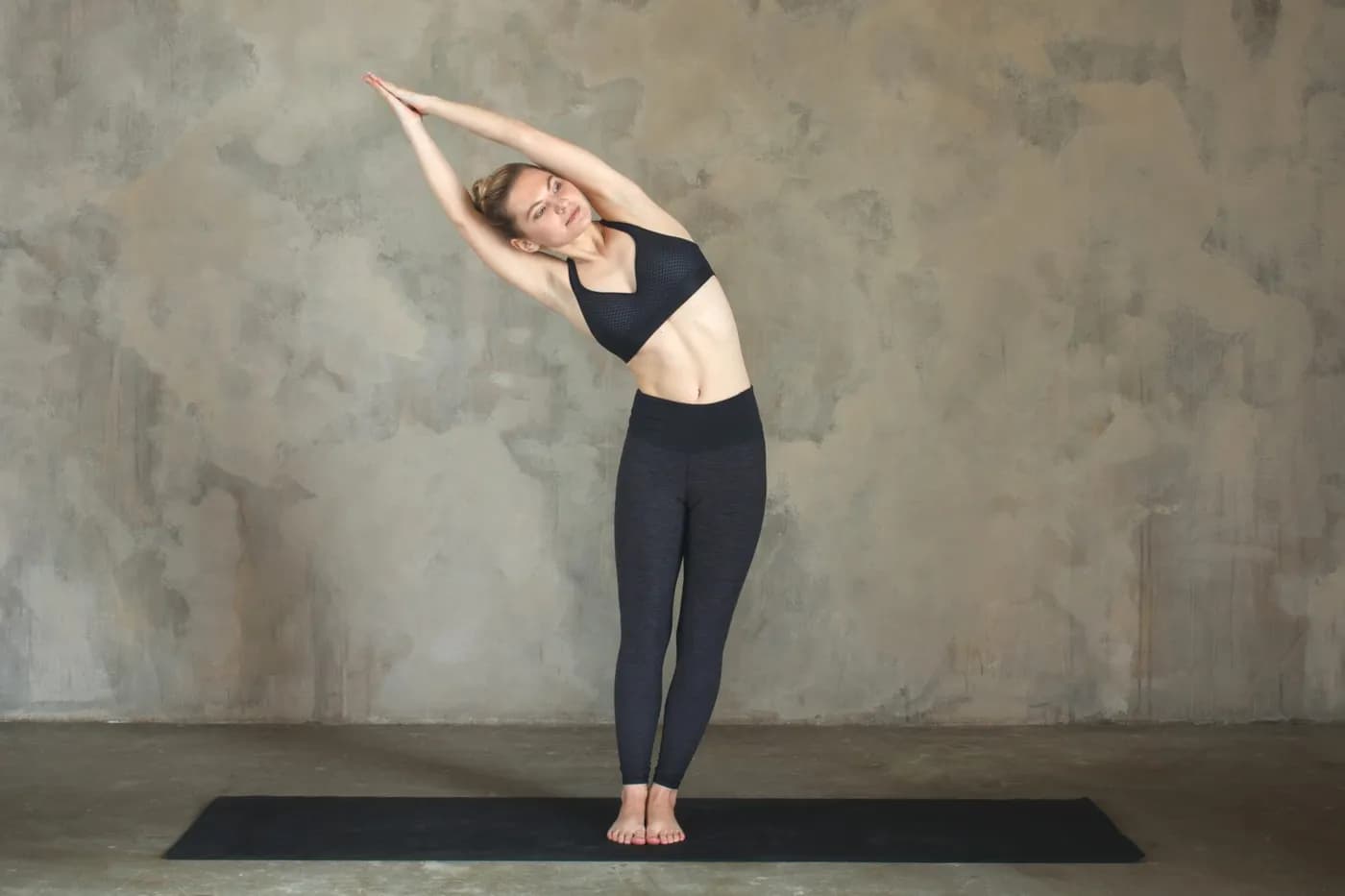
Tiryaka Tadasana, or Swaying Palm Tree Pose, is a standing lateral bend that stretches the intercostal muscles, obliques, and lateral spine — improving lateral flexibility, toning the waist, opening the ribcage, and energising the body. A core posture of the Pawanmuktasana therapeutic series. Suitable for all fitness levels from the first yoga session.
What is Tiryaka Tadasana?
Tiryaka Tadasana — known in English as Swaying Palm Tree Pose or Standing Lateral Bend — derives from Sanskrit: Tiryaka (oblique, sideways, or swaying), Tada (palm tree), and Asana (posture). The body rises tall like a palm tree and then bends smoothly from side to side — exactly as a palm sways in the wind.
Tiryaka Tadasana is a foundational standing lateral bend that stretches the obliques, intercostal muscles, quadratus lumborum, and lateral hip muscles in a direction that most yoga sequences and fitness routines systematically neglect. It is a core posture in the Pawanmuktasana therapeutic series, specifically designed to improve lateral spinal mobility and digestive health.
At Habuild, Tiryaka Tadasana is taught both as a standalone lateral stretch and as a dynamic flowing practice — its benefits for waist toning and abdominal health making it particularly relevant for lateral body fitness goals.
Tiryaka Tadasana Benefits
Physical Benefits
- Stretches the Lateral Body and Intercostal Muscles Tiryaka Tadasana provides one of the most effective and accessible lateral body stretches in yoga — lengthening the obliques, intercostal muscles, lateral abdominal wall, and quadratus lumborum simultaneously. This lateral flexibility is foundational to overall flexibility and is rarely developed in forward-dominant exercise routines.
- Tones the Waist and Supports Abdominal Health The lateral bend directly engages and stretches the oblique muscles — producing a toning effect on the waist that contributes meaningfully to abdominal health goals over consistent daily practice.
- Improves Lateral Spinal Mobility Tiryaka Tadasana works the facet joints and intervertebral discs through their lateral flexion range — a direction of spinal movement that most yoga sequences do not address. This lateral spinal mobility is essential for long-term three-dimensional spinal health.
- Opens the Chest and Supports Respiratory Health The ribcage expansion produced by the lateral bend — particularly on the upper side — stretches the intercostal muscles and increases the available range of thoracic expansion, supporting respiratory capacity and chest wall flexibility.
Mental Benefits
- Energises and Creates Lateral Spaciousness The lateral opening creates a physical sensation of spaciousness in the ribcage and lateral body that practitioners associate with energy, ease, and emotional lightness — an excellent midday or morning energiser after hours of forward-facing desk work.
How to Do Tiryaka Tadasana — Step-by-Step Instructions
Key Principles
Key Principles Two principles: bend from the spine, not the hip — the lateral bend comes from the vertebral column itself, not from a hip hike; and keep the pelvis square — both hip points face forward throughout the bend, ensuring the stretch reaches the lateral body rather than the hip.
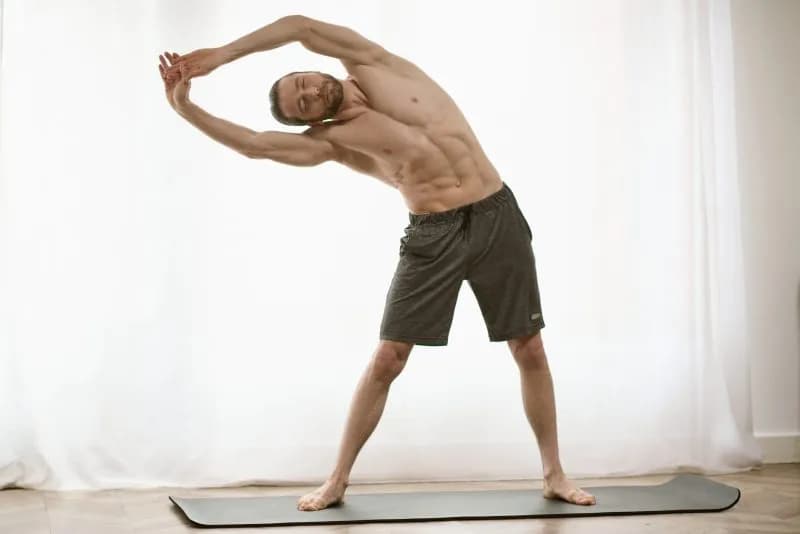
Tiryaka Tadasana — Step by Step Step 1: Ground and Raise the Arms Stand with feet hip-width or slightly wider apart. Root all four corners of both feet firmly. Inhale and raise both arms overhead, fingers pointing upward and palms facing each other.
Step 2: Interlace the Fingers and Press Upward Interlace the fingers and press the palms upward toward the ceiling — creating maximum spinal length before the lateral bend begins.
Step 3: Bend Laterally to the Right On the exhale, bend the entire torso to the right — creating a long arc from the left heel to the fingertips. The bend comes from the lateral spine, not from a hip shift.
Step 4: Keep the Hips Square Resist the urge to allow the left hip to jut outward. Both hip points face forward throughout — the entire bend comes from the vertebral lateral flexion.
Step 5: Hold and Breathe Into the Upper Ribcage Hold for three to five breaths, breathing into the expanded left ribcage on each inhale. Each inhale creates more space; each exhale allows the bend to deepen naturally.
Step 6: Return to Centre and Repeat Left Inhale to return to centre. Exhale and bend to the left for three to five breaths. For the dynamic version: sway slowly from right to left in coordination with the breath.
Breathing
Breathing into the upper (stretched) side of the ribcage on the inhale is the key to maximising the intercostal stretch. The swaying dynamic variation uses the breath as the driver — inhaling through centre, exhaling into each bend.
Preparatory Poses
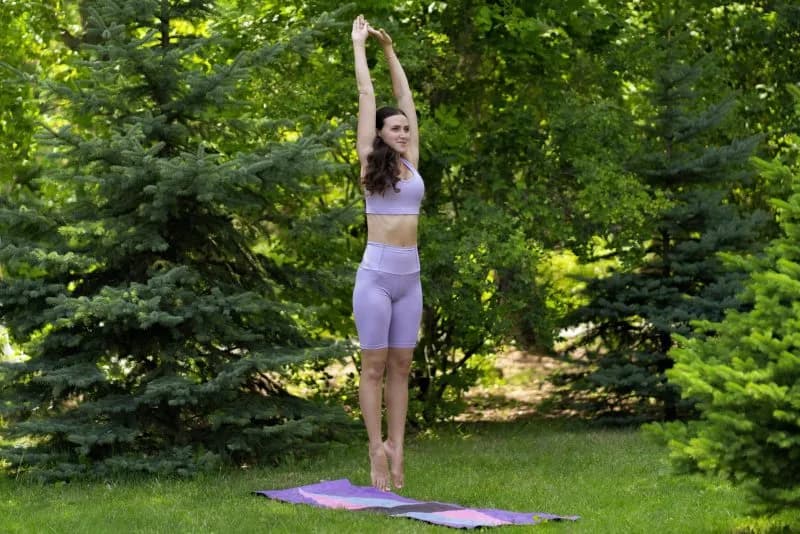
- Tadasana (Mountain Pose, 60 seconds) — Establishes the grounded, upright standing awareness before the lateral movement.
- Shoulder and wrist warm-up — Prepares the shoulder joint for the overhead interlaced arm position.
- Simple arm-overhead lateral stretch — A single-arm version at reduced intensity before the full interlaced expression.
Variations
- Variation 1: Single Arm Overhead — Most Accessible One arm extends overhead and the opposite arm slides down the outside of the thigh — a less demanding arm position accessible to those with shoulder sensitivity or limited overhead reach.
- Variation 2: Arms Overhead, Fingers Interlaced — Standard Both arms raised and interlaced overhead, palms pressing upward — the standard form providing maximum lateral body length and the deepest intercostal stretch.
- Variation 3: Dynamic Swaying — Flowing Practice Gentle swaying from side to side in coordination with the breath — the traditional Pawanmuktasana form. Ideal as a warm-up and for practitioners with limited static stretch tolerance.
Common Mistakes to Avoid
- Bending Forward Instead of Laterally The most common error — use a mirror or wall behind the back to check that the torso bends purely sideways, not rotating forward.
- Allowing the Hip to Jut Outward The hip hike bypasses the lateral spinal flexion and reduces the intercostal and oblique stretch to minimal. Keep both hip points facing forward throughout.
- Reaching Only with the Arm Rather Than the Entire Lateral Spine The reach begins at the base of the spine — each vertebra contributing to the lateral arc — not just from the shoulder and arm.
Who Should Practise?
- Those with Respiratory Conditions and Chest Tightness The intercostal stretching and ribcage expansion make Tiryaka Tadasana specifically valuable for those managing asthma or reduced lung capacity.
- Desk Workers Seeking a Midday Reset Two to three minutes of standing lateral bends provides a physical and mental reset that dramatically improves afternoon productivity and posture after hours of forward-facing sitting.
- Is Tiryaka Tadasana Good for Beginners? Yes — the single-arm overhead variation is one of yoga’s most accessible movements. It is appropriate from the first yoga session and delivers immediate intercostal and oblique stretching.
Make Tiryaka Tadasana a Part of Your Daily Practice
Tiryaka Tadasana is the yoga tradition’s most accessible and most direct lateral body opener — its swaying palm arch delivering the intercostal flexibility, oblique stretch, and lateral spinal mobility that forward-bending dominant practice consistently leaves behind.
The most effective way to learn Tiryaka Tadasana correctly — with the spine-led lateral bend and square-hip guidance that make it genuinely therapeutic — is under live expert instruction with Habuild.
Start your 14 day free yoga journey with Habuild, today!
Related reads: Konasana (Angle Pose): Steps Benefits and Spine Health · Marjariasana (Cat Cow Pose): Steps and Spine Flexibility Benefits
Swaying Palm Tree Pose looks simple, but the lateral flexibility and waistline definition it offers depend on the spine getting used to bending sideways again and again, not one deep sway. Tiryaka Tadasana is a good example of a pose whose value is almost entirely in repetition. Habuild’s Yoga Everyday program includes standing stretches like this in a structured daily flow built around that repetition.
Frequently Asked Questions
Related Articles

Tadasana — The Mountain Pose
Tadasana, or Mountain Pose, is the quiet foundation every standing yoga pose is built on — simple to look at, precise to get right.

Trikonasana: Triangle Yoga Pose, Steps & Benefits
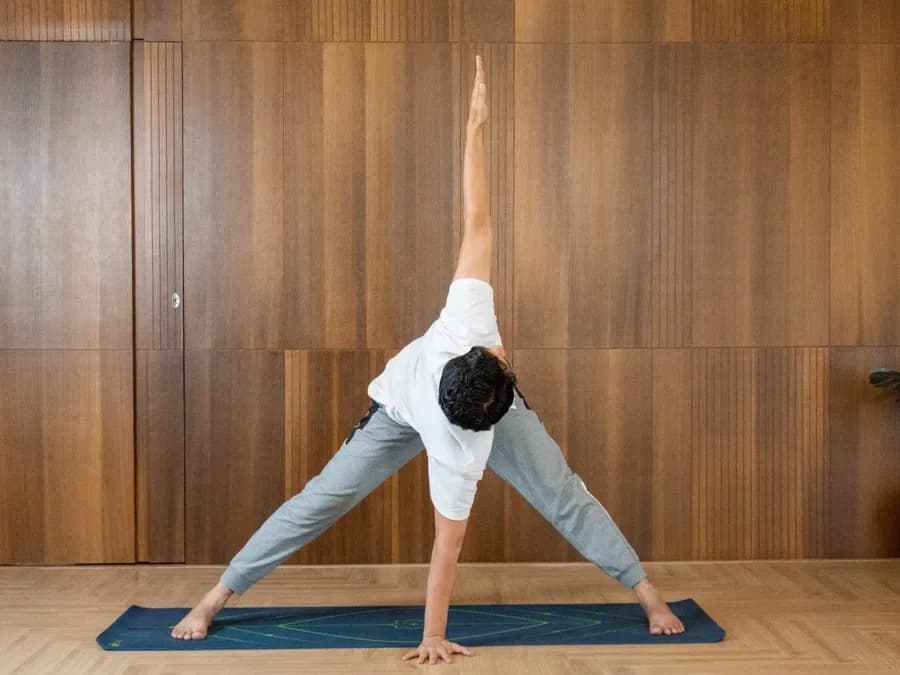
Trikonasana, the Triangle Pose, opens the hips, lengthens the lateral body, strengthens the legs and core, and improves spinal alignment in one complete standing pose.
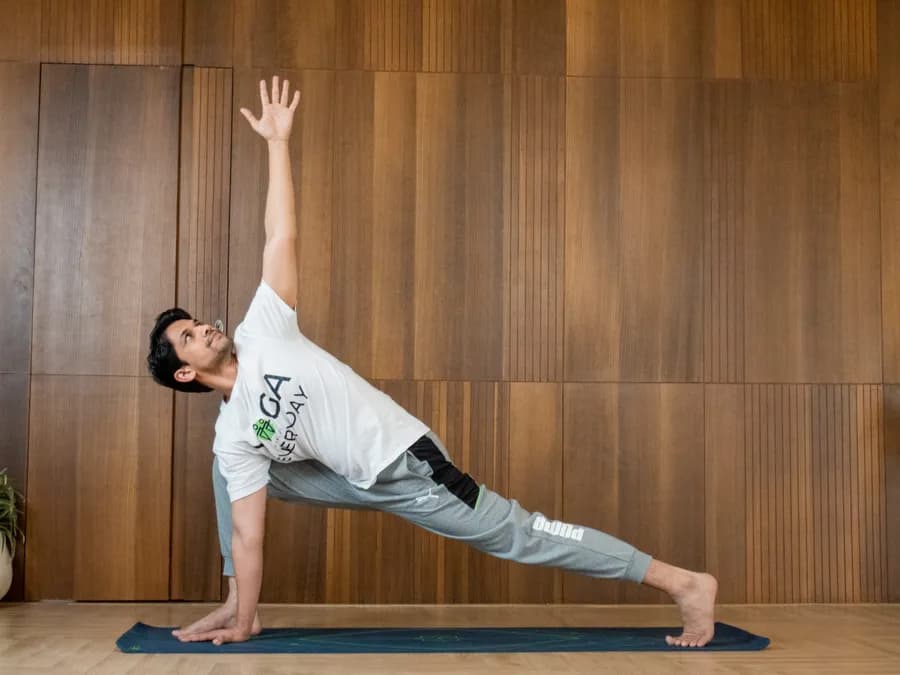
Utthita Parsvakonasana: Steps Strength Benefits and Alignment
Practice Utthita Parsvakonasana with Habuild. Follow the extended side angle steps to strengthen your legs, open your hips, and boost flexibility. Start today!
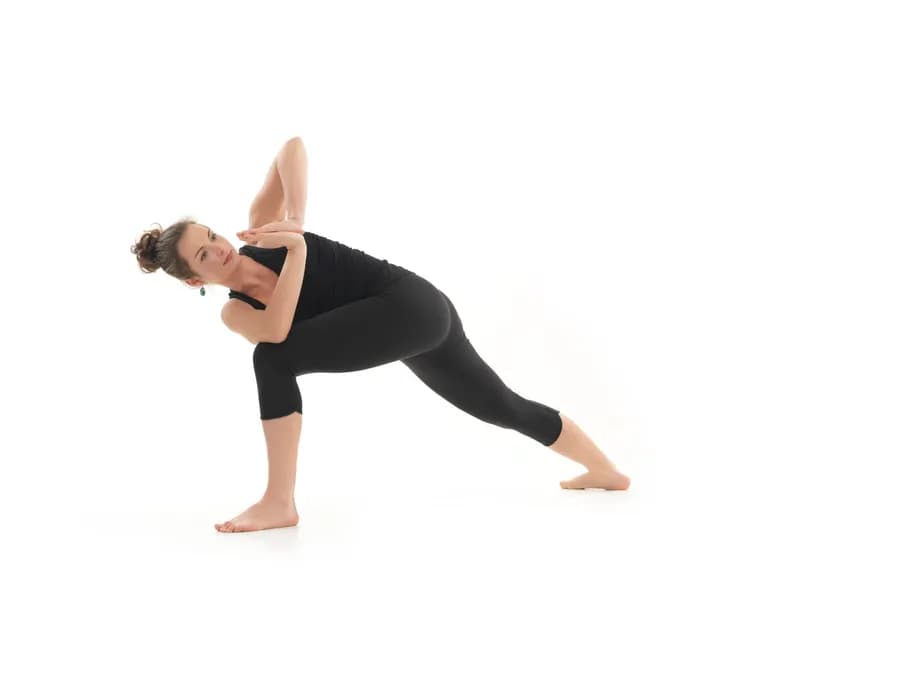
Parivrtta Parsvakonasana: Steps Twisting Benefits and Alignment
Practice Parivrtta Parsvakonasana with Habuild. Follow the revolved side angle steps to strengthen your legs, improve digestion, and boost flexibility. Start!
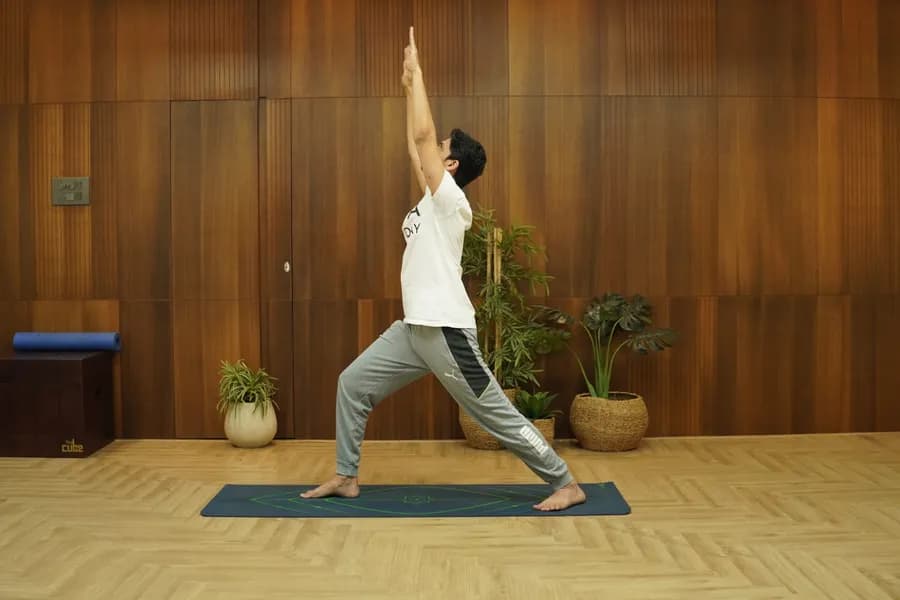
Virabhadrasana (Warrior Poses): Complete Guide to Steps and Benefits
Practice Virabhadrasana with Habuild. Follow the warrior pose steps to build leg strength, boost flexibility, and develop stamina and mental focus. Start today!
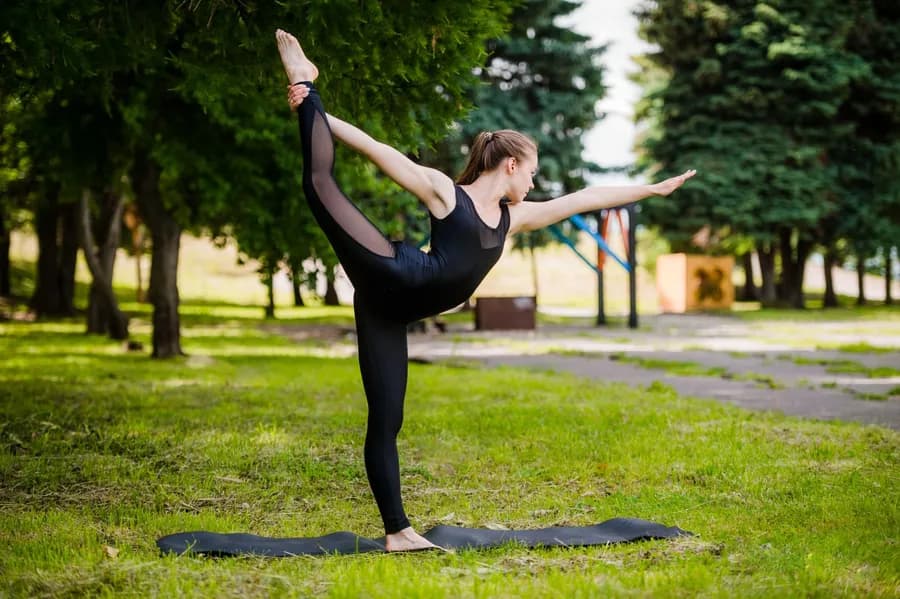
Natarajasana (Dancer Pose): Steps and Balance Benefits
Practice Natraj Asana with Habuild. Follow Lord of the Dance pose steps to improve balance, boost flexibility, and strengthen your spine daily. Start today!