
Rudra Mudra (The Gesture of Shiva): Steps, Benefits & Precautions
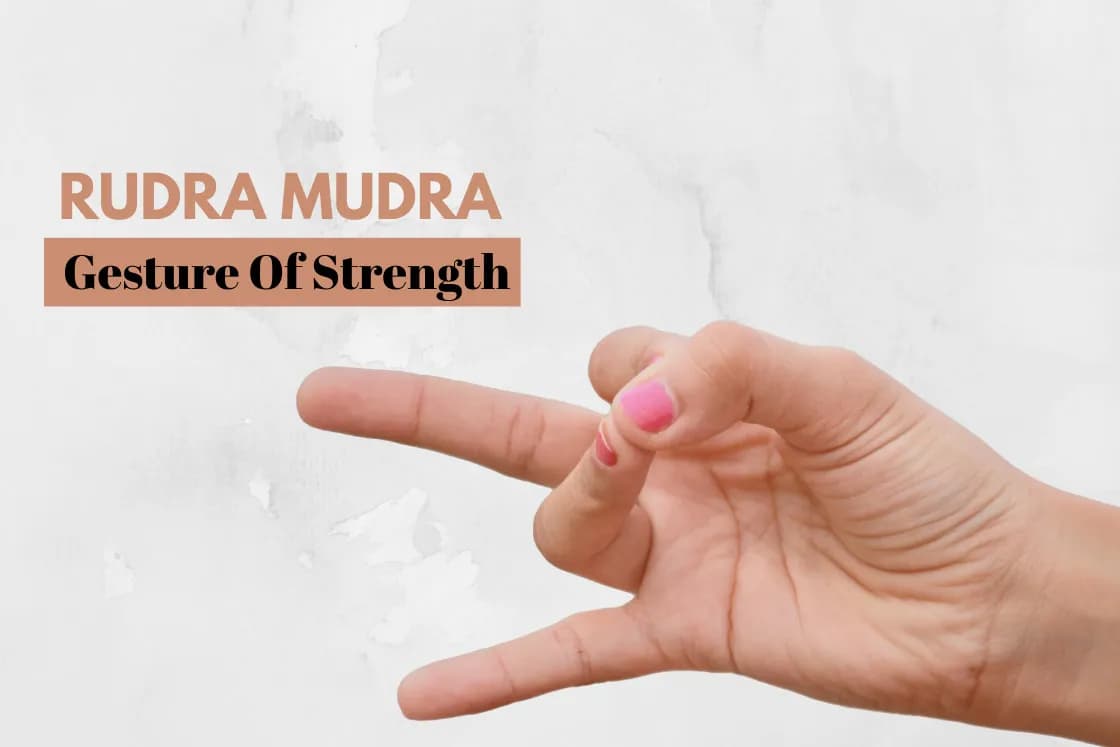
The index and ring finger tips touch the thumb while the middle and little fingers stay extended — associated with Lord Shiva's transformative energy, it's used to support focus and vitality. See the steps and benefits.

Key Takeaways
- Index and ring fingertips touch the thumb while the middle and little fingers stay extended.
- Named after Lord Shiva’s transformative energy and associated with inner strength.
- Believed to activate the Manipura chakra, the seat of personal power near the navel.
- Traditionally used to ease afternoon fatigue and support steady energy levels.
- Combined with leg-elevating postures, it’s used to support circulation in the lower limbs.
- Pairs naturally with Pawanmuktasana to help manage bloating and digestive irregularity.
Rudra Mudra is a yogic hand gesture in which the tips of the index finger and ring finger touch the tip of the thumb while the middle and little fingers remain extended. Associated with Lord Shiva’s transformative energy, this hasta mudra activates the Manipura chakra and is used in meditation and pranayama to support focus, vitality, and inner steadiness.
Rudra Mudra is a sacred hand gesture (hasta mudra) rooted in the ancient Indian tradition of yoga and Ayurveda. The name comes from Sanskrit — Rudra refers to one of the most powerful manifestations of Lord Shiva, the deity associated with transformation, cosmic energy, and inner strength. Pronounced as ROO-druh MOO-druh, this gesture is sometimes called the Gesture of Shiva or the Gesture of the Ruler.
What is Rudra Mudra?
In traditional yogic philosophy, each finger corresponds to one of the five elements (Pancha Tattvas). The thumb represents fire (Agni), the index finger represents air (Vayu), and the ring finger represents earth (Prithvi). By joining these three, Rudra Mudra is believed to balance and activate the solar plexus (Manipura chakra) — the seat of personal power and vitality. This grounding quality makes it distinct from other common mudras.
Within the broader yoga system, Rudra Mudra is classified as a hasta mudra — a hand seal practiced during pranayama, seated meditation, or as a standalone contemplative exercise. It does not require a specific asana, which makes it highly accessible. It pairs naturally with grounded seated postures like Vajrasana, where stillness of the body amplifies the subtle effects of the gesture.
Rudra Mudra Benefits
Physical Benefits
- Benefit 1: Supports Energy Levels and Combats Fatigue Rudra Mudra is traditionally associated with stimulating the Manipura chakra, the energy centre located near the navel. Regular practice may gradually help reduce feelings of heaviness and low energy, particularly in the afternoon. Practitioners who include this mudra in their daily routine often report a subtle but steady improvement in their overall sense of vitality over consistent weeks of practice.
- Benefit 2: May Help Ease Symptoms Related to Circulatory Discomfort Rudra mudra for varicose veins has drawn attention in integrative wellness communities. While yoga is not a treatment for varicose veins, consistent practice of this mudra — combined with leg-elevating postures — may gradually support better circulation in the lower limbs and ease the sense of heaviness that often accompanies such conditions. Always consult your doctor for medical management.
- Benefit 3: Grounds the Body and Supports Digestive Awareness By activating the earth element through the ring finger, Rudra Mudra is said to support the grounding of excess Vata energy, which in Ayurvedic tradition is linked to digestive irregularity and restlessness. Practicing it alongside Pawanmuktasana (the Wind-Relieving Pose) creates a complementary combination for those managing bloating or abdominal discomfort.
Mental and Emotional Benefits
- Benefit 4: Calms the Nervous System and Reduces Stress One of the most consistently reported rudra mudra benefits is a quieting effect on a scattered or anxious mind. The gesture’s connection to Shiva’s transformative energy is interpreted in practice as a capacity to convert nervous mental chatter into focused calm. Even 10 minutes of holding this mudra during slow breathing can help shift the nervous system toward a more settled state.
- Benefit 5: Sharpens Focus and Mental Clarity The solar plexus connection makes Rudra Mudra particularly useful before tasks requiring sustained concentration — study sessions, deep work, or morning meditation. Practitioners often use it as a pre-session centering ritual. The combination of breath awareness and the physical anchor of the hand gesture gives the mind a stable point of return when attention wanders.
- Benefit 6: Builds Emotional Resilience and a Sense of Inner Steadiness Repeated practice of Rudra Mudra, especially when held during challenging breathing exercises or extended meditation, is associated with gradually building equanimity. This is not a dramatic shift but a cumulative one — the kind of inner steadiness that grows through consistent daily practice rather than a single session.
How to Do Rudra Mudra — Step-by-Step Instructions
Key Principles
Before you begin, find a comfortable seated position — on a chair, on the floor in Sukhasana, or in Vajrasana. Your spine should be upright without being rigid. Rest both hands on your thighs with palms facing upward. Keep your shoulders relaxed and your jaw soft. The mudra works best when the body is still and the breath is conscious.
Step 1: Starting Position
Sit comfortably with your back straight. Place both hands on your thighs with palms facing upward. Take two or three natural breaths to arrive in the moment. Feel the weight of your sit bones on the surface beneath you. This grounding before forming the mudra is part of the practice, not a preamble to it.
Step 2: Extend and Identify Your Fingers
Spread all five fingers of both hands gently. Identify the thumb (Agni), index finger (Vayu), and ring finger (Prithvi) — these are the three fingers that will make contact. The middle and little fingers will remain extended throughout. Do this identification on both hands before forming the gesture.
Step 3: Curl the Index and Ring Fingers Toward the Thumb
On both hands simultaneously, bring the tips of the index finger and the ring finger to gently touch the tip of the thumb. The touch should be light — not a pinch or a press. Imagine you are holding something as delicate as a soap bubble. The middle and little fingers remain comfortably extended, not stiff or rigid.
Step 4: Settle the Hands on the Thighs
Rest both hands, now holding the mudra, gently back on your thighs. Palms can face upward (receptive orientation) or downward (grounding orientation) — both are used in different traditions. For beginners, palms facing upward is generally recommended. Your elbows should be relaxed, not lifted or pressing into your sides.
Step 5: Final Position and Hold
Close your eyes gently or soften your gaze downward. Hold the mudra for a minimum of 5 minutes, working toward 15–20 minutes per session as your practice matures. Notice the quality of your breath, the sensations in your palms, and the gradual settling of mental activity. Do not force any experience — simply hold and observe.
Step 6: How to Come Out of Rudra Mudra
To release, simply uncurl the index and ring fingers and allow all five fingers to extend naturally. Rest both palms flat on your thighs for a breath or two before opening your eyes. Take a moment to notice any shift in how you feel — this pause helps integrate the practice before you return to activity.
Breathing in Rudra Mudra
The most effective breathing approach while holding Rudra Mudra is slow, diaphragmatic breathing — inhale for a count of four, hold gently for two, exhale for a count of six. This extended exhale activates the parasympathetic nervous system, which complements the calming and centering quality of the mudra. Avoid shallow chest breathing. If the breath feels forced, simply return to natural breathing without a count.
Preparatory Poses Before Rudra Mudra
While Rudra Mudra does not require physical warm-up in the way a demanding asana does, preparing the body and mind with gentle movement significantly deepens the experience.
- Neck rolls and shoulder circles — Release tension from the upper body so the hands can rest comfortably without the arms pulling upward.
- Sukhasana (Easy Seated Pose) — Establishes a stable, comfortable seat. A few minutes in Sukhasana with eyes closed naturally transitions the mind toward inward focus before the mudra practice begins.
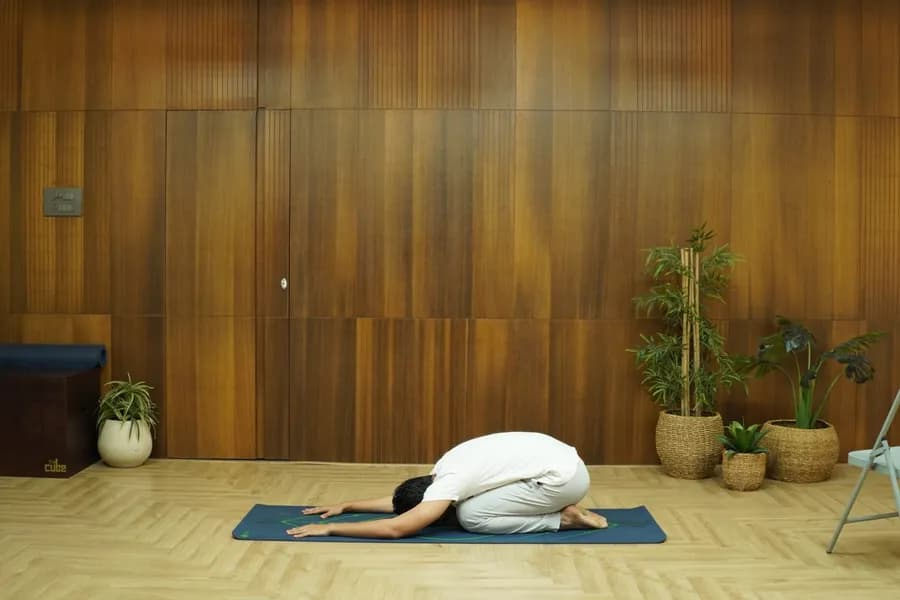
- Balasana (Child’s Pose) — Two minutes in Child’s Pose quiets the nervous system and draws awareness inward, creating fertile ground for a mudra session.
- Three rounds of deep pranayama breathing — Simple alternate-nostril breathing or three slow full-body breaths prepare the pranic body to receive the subtle work of the mudra.
Variations of Rudra Mudra
Variation 1: Ardha Rudra Mudra (Half Version)
Difficulty: Beginner
In the Ardha (half) version, only one hand forms the Rudra Mudra while the other rests open in a neutral position on the opposite thigh. This is a useful starting point for those who find it initially difficult to maintain precise finger alignment in both hands simultaneously. It also allows you to observe the difference in sensation between the active and the resting hand, building sensitivity to the mudra’s effects.
Variation 2: Rudra Mudra with Pranayama Integration
Difficulty: Intermediate
In this variation, Rudra Mudra is held during a structured pranayama practice such as Nadi Shodhana (Alternate Nostril Breathing) or Bhramari (Humming Bee Breath). The combination of the mudra’s solar plexus activation and the pranayama’s breath regulation creates a noticeably intensified effect on mental clarity and calm. Particularly useful before meditation or creative work.
Variation 3: Standing Rudra Mudra (Advanced Context)
Difficulty: Intermediate to Advanced
This variation involves holding Rudra Mudra in both hands while standing in Tadasana (Mountain Pose) with eyes open, focusing on a fixed point. It develops the ability to access the grounded, focused quality of the mudra even while active — translating the stillness of seated practice into an upright, alert presence. Useful for practitioners working on sustained mental focus during dynamic activities.
Common Mistakes to Avoid in Rudra Mudra
- Pressing the Fingertips Too Hard Many beginners pinch the thumb and fingers together firmly, believing more pressure yields more benefit. In practice, this creates muscular tension in the hand and forearm that works against the relaxation the mudra is meant to cultivate. The correct contact is a feather-light touch — just enough to maintain the circuit.
- Confusing the Index and Middle Fingers A frequent error — especially for first-time practitioners — is touching the middle finger (instead of the index finger) to the thumb. This actually forms a different mudra (Apana Mudra). Take a moment to consciously identify your index finger (the pointer finger) before forming the gesture each time.
- Holding Tension in the Shoulders and Jaw The hands may form the correct gesture, but if the shoulders are raised, the jaw is clenched, or the forehead is furrowed, the practice is incomplete. Periodically scan your body during the hold and consciously release tension in the face, neck, and shoulders.
- Practicing for Too Short a Duration Rudra Mudra practiced for only 60–90 seconds rarely produces noticeable effects. The traditional recommendation is a minimum of 5 minutes, with deeper benefits emerging at 10–15 minutes. If time is genuinely limited, even 5 focused minutes is far more effective than a brief, inattentive hold.
- Ignoring Breath Quality Forming the mudra while breathing shallowly through the chest significantly diminishes its impact. The mudra and the breath are partners — one without the other is like a fire without air. Always pair Rudra Mudra with conscious, abdominal breathing.
- Inconsistent Daily Practice Perhaps the most common and most consequential mistake is sporadic practice. The benefits of Rudra Mudra — as with all yoga practices — are cumulative. A short daily practice over weeks will yield far more than an occasional long session. Consistency is the actual technique.
Who Should Practise Rudra Mudra?
- Those Managing Fatigue, Low Energy, or Circulatory Discomfort People dealing with persistent tiredness, a sense of sluggishness, or conditions involving circulation — such as those exploring rudra mudra for varicose veins — may find this mudra a supportive addition to their daily wellness routine. It works best when practiced consistently alongside appropriate medical care and a broader movement practice. Think of it as one gentle, daily step toward feeling steadier, not a standalone solution.
- Is Rudra Mudra Good for Beginners? Absolutely. Rudra Mudra is one of the most accessible entry points into mudra practice precisely because it requires no flexibility, no equipment, and no complex posture. A beginner can form the gesture correctly within minutes of instruction. The challenge is not the physical execution but the cultivation of the stillness and breath awareness that make the practice meaningful — and that develops naturally with time.
- Working Professionals and Students For anyone whose day demands sustained mental focus — programmers, students, writers, managers — Rudra Mudra offers a simple mid-day reset that requires only a chair and five minutes. It is particularly effective as a pre-meeting or pre-study centering practice. The combination of the grounding mudra and slow breathing can noticeably shift the quality of attention within a single session.
- Intermediate Yoga Practitioners Deepening Their Practice For practitioners already comfortable with asana, adding mudra work like Rudra Mudra opens a new dimension of practice. Pairing it with inversions such as Sarvangasana or backbends creates complementary circuits of energy — the inversion calms and inverts perspective while the mudra grounds and centres. This combination is especially valued in practices focused on nervous system balance.
Make Rudra Mudra a Part of Your Life
Rudra Mudra is a deceptively simple practice — three fingers, a breath, and a few minutes of stillness — but its effects on energy, focus, and inner steadiness are real and cumulative. You have learned what it is, the key rudra mudra benefits it offers for both body and mind, and who is best suited to make it part of their daily rhythm.
Whether you are a complete beginner or someone navigating a specific concern like fatigue or circulatory discomfort, the mudra is genuinely accessible. The variations and modifications covered here mean you can start exactly where you are — and the common mistakes section ensures you build the habit correctly from the first session.
The best way to make Rudra Mudra a consistent part of your practice is to learn it in context — alongside pranayama, asana, and a community that shows up every day. Habuild’s daily online yoga classes are designed exactly for this kind of structured, supported consistency.
Frequently Asked Questions
Related Articles
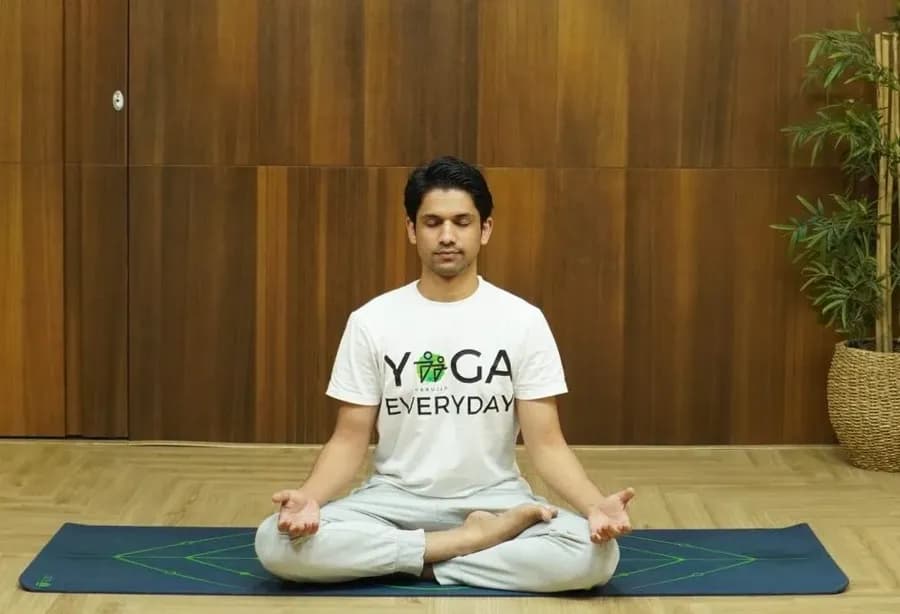
Padmasana Lotus Pose: Steps, Benefits & Guide
Padmasana, the Lotus Pose, is the foundational seat of meditation, pranayama, and classical yoga practice, creating a stable, grounded, symmetrically aligned seated base.

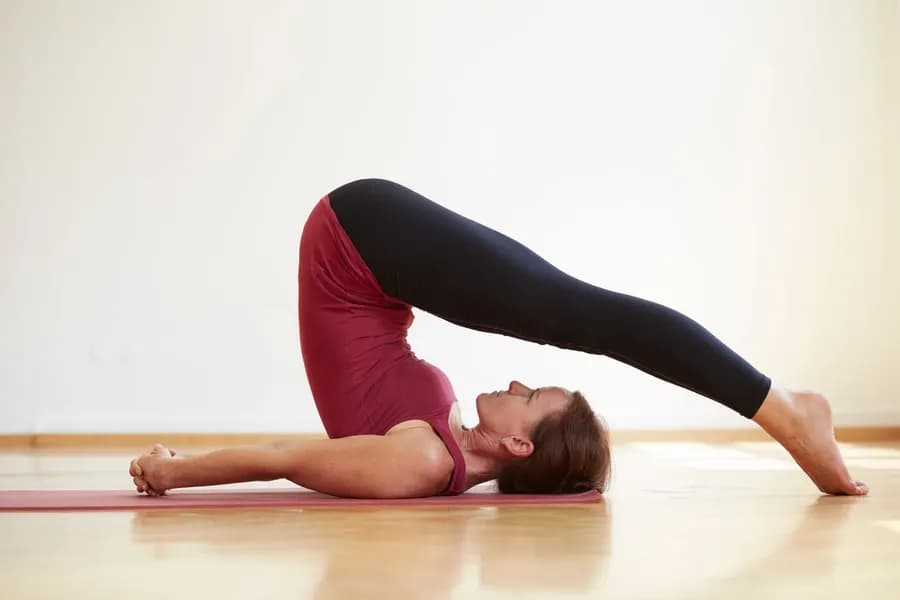
Halasana (Plow Pose): Steps Benefits and Precautions
Try halasana with Habuild. Learn halasana benefits like better flexibility, improved sleep, and relief from back pain. Master the yoga plow pose. Start today!

Surya Namaskara: Steps Benefits and Daily Practice Guide
Explore Surya Namaskara with Habuild. Discover the powerful benefits of Surya Namaskara to boost energy, improve flexibility, and transform your health today!

Bhujangasana: Cobra Pose Steps, Benefits & Tips
Bhujangasana, or Cobra Pose, strengthens the spine and entire back musculature, opens the chest, stimulates abdominal organs, and corrects the postural damage of prolonged sitting.
Balasana (Child’s Pose): Steps and Benefits for Mind and Body
Try balasana with Habuild. Practice the balasana pose to relieve stress, ease back tension, and deeply relax your body and mind. Start your yoga session now!