
Matangi Mudra Benefits: Steps, Uses & Precautions
Discover matangi mudra benefits for digestion, focus, and inner harmony. Learn how to do it correctly and safely.

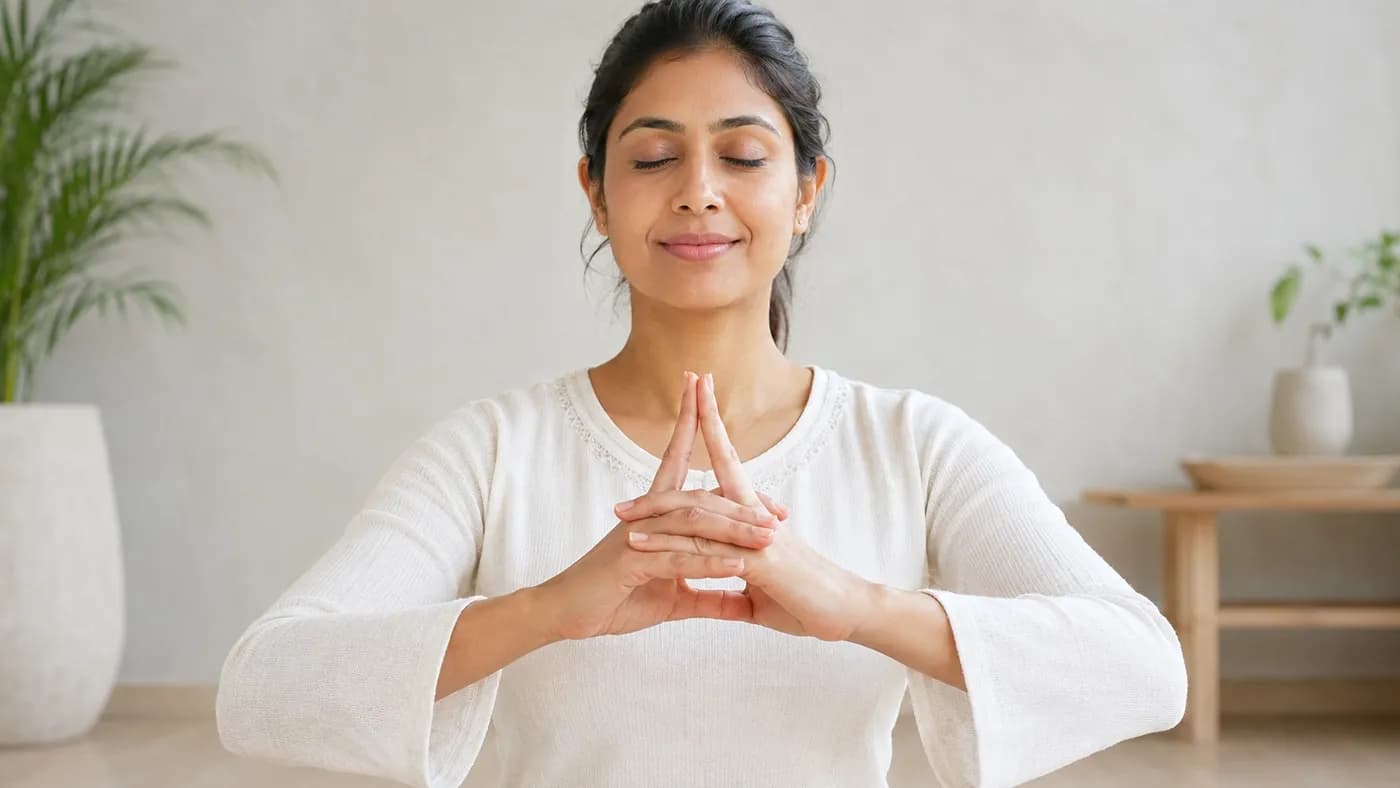
Key Takeaways
- Both hands interlace at navel level with only the middle fingers extended and touching.
- Named after Goddess Matangi, one of the ten Mahavidyas in Hindu tantric tradition.
- Placed deliberately over the manipura (solar plexus) chakra governing digestion and self-expression.
- Combined with diaphragmatic breathing, it builds mindful connection with the abdominal muscles.
- May help soften the holding patterns that chronic stress creates in the diaphragm and mid-back.
- Symbolically represents the voice, creativity, and the digestion of both food and experience.
What is Matangi Mudra?
Matangi Mudra is a sacred hand gesture named after Goddess Matangi, one of the ten Mahavidyas in the Hindu tantric tradition. The name comes from the Sanskrit root matanga, which originally referred to a wise and enlightened being who has transcended conventional boundaries. Pronounced mah-TAN-gee moo-DRA, the gesture is sometimes called the Mudra of Inner Harmony because of how it draws the practitioner’s attention toward the solar plexus — the energetic centre of personal power, digestion, and self-expression.
To form this mudra, both hands are interlaced at the navel level with the middle fingers extended and touching at their tips, while all other fingers remain interlocked. The resulting shape is subtle but precise, and its placement over the manipura (solar plexus) chakra is deliberate. Symbolically, Matangi represents the voice, creativity, and the digestion of both food and experience — making this mudra deeply relevant to how we process the world around us.
Within the broader system of yoga, mudras are understood as psycho-physical gestures that redirect prana (life-force energy) through specific pathways in the body. Matangi Mudra belongs to a family of gestures that work primarily on the abdominal and thoracic regions. It pairs naturally with pranayama and seated meditation, and is often taught alongside practices that address digestive wellness, confidence, and emotional regulation.
Matangi Mudra Benefits
Physical Benefits
- Benefit 1: Supports Digestive Function and Abdominal Comfort When held at the solar plexus with mindful breathing, Matangi Mudra gently stimulates the manipura chakra, which governs the digestive organs including the stomach, liver, and intestines. Regular practice may gradually ease the discomfort associated with sluggish digestion, bloating, and irregular bowel patterns. This makes it a valuable complementary practice alongside dietary habits and medical guidance — not a replacement for them.
- Benefit 2: Strengthens Awareness of the Core and Diaphragm The position of the hands directly over the navel draws conscious attention to the core. Combined with slow diaphragmatic breathing, this mudra helps practitioners build a mindful connection with the abdominal muscles and the breath — something that supports posture, lung capacity, and overall body awareness over time. Practitioners often find that pairing this mudra with Pawanmuktasana creates a particularly grounding abdominal routine.
- Benefit 3: May Ease Tension in the Chest and Diaphragm Chronic stress tends to create holding patterns in the diaphragm and mid-back. The gentle pressure and intentional placement of Matangi Mudra, paired with extended exhalations, can help soften these holding patterns over time. It is particularly useful during periods of high workload when physical tension accumulates around the ribcage and upper abdomen.
- Benefit 4: Calms the Nervous System and Reduces Reactive Stress Matangi Mudra is associated with activating the parasympathetic branch of the nervous system when held with slow, conscious breathing. For those dealing with anxiety, emotional reactivity, or a persistently busy mind, regular practice may gradually ease that inner restlessness. Over weeks of consistent practice, many practitioners report feeling more grounded and less triggered by daily pressures — not because the pressures change, but because their inner response does.
Mental and Emotional Benefits
- Benefit 5: Supports Self-Expression and Creative Confidence Goddess Matangi is closely associated with voice, music, and articulate self-expression. Practitioners who work with this mudra alongside chanting or journaling often notice a gradual shift in how comfortably they communicate — whether in professional settings or personal relationships. This benefit is subtle and builds over time, making consistency the key ingredient. Practising in Sukhasana creates a stable seated base for this kind of inner reflection.
- Benefit 6: Improves Focus and Meditative Depth The physical act of interlacing the fingers and holding a precise position creates a quiet anchor for attention. This proprioceptive engagement helps reduce mental wandering during meditation, making it easier to sustain focus for longer periods. Students new to meditation often find Matangi Mudra a useful entry point because the gesture gives the restless mind something tangible to organise around.
How to Do Matangi Mudra — Step-by-Step Instructions
Key Principles
Matangi Mudra is a gesture of stillness, not effort. The hands should be relaxed, not gripped. The breath leads the practice — if you lose the breath, you lose the mudra. Always practise on an empty or light stomach, and choose a seated position where your spine can be upright without strain.
Step 1: Starting Position
Sit comfortably in Padmasana, Sukhasana, or on a chair with your feet flat on the floor. Lengthen your spine gently upward without forcing. Relax your shoulders away from your ears and soften your jaw. Close your eyes or soften your gaze downward. Take three natural breaths to settle in before forming the gesture.
Step 2: Interlace the Fingers
Bring both hands in front of your navel, palms facing inward toward your body. Gently interlace all fingers except the middle fingers. The grip should feel secure but soft — think of holding a small, delicate object rather than making a fist. Check that both palms are roughly level and symmetrical.
Step 3: Extend the Middle Fingers
Carefully unfurl both middle fingers so they point straight upward and touch each other tip-to-tip. These extended fingers represent the axis of focus and the channel of energy being activated. Keep them straight but not rigid. The remaining fingers stay interlaced throughout the hold.
Step 4: Position at the Solar Plexus
Bring your interlaced hands, with middle fingers extended, to rest at the level of your navel or just above it — at the solar plexus region. The backs of your hands may lightly rest against the lower abdomen, or you can hold them slightly away from the body. Either is fine; choose what feels more stable. Feel the gentle awareness this placement creates in your core.
Step 5: Final Position and Hold
Once your hands are settled, let your breath slow naturally. Aim for a hold of 5 to 15 minutes. Beginners can start with just 3 to 5 minutes and gradually extend. While holding, keep your attention on the natural rise and fall of your abdomen. If your mind wanders, gently return to the sensation of the gesture and the breath — no judgment needed.
Step 6: How to Come Out of Matangi Mudra
When you are ready to finish, take one slow, conscious breath. Then gently uncurl the middle fingers first and release the interlaced grip. Let both hands rest softly on your thighs, palms facing upward. Sit quietly for at least one minute before opening your eyes fully and resuming activity. This transition is part of the practice — do not rush it.
Breathing in Matangi Mudra
Breathe through the nose throughout. Aim for an inhalation of around 4 counts, a brief natural pause, and an exhalation of 6 to 8 counts. The longer exhalation activates the parasympathetic response more effectively. Do not force or strain the breath. If 4:8 feels too long, begin with 3:5 and expand gradually. Ujjayi breath (a soft throat constriction creating an ocean-like sound) pairs particularly well with Matangi Mudra during longer holds.
Preparatory Poses Before Matangi Mudra
Before sitting in Matangi Mudra, especially for longer holds, warming up the hips, spine, and abdomen helps you settle into stillness more comfortably. Consider these preparations:
- Balasana (Child’s Pose) — gently releases the lower back and quiets the nervous system before seated practice.
- Cat-Cow (Marjaryasana-Bitilasana) — warms up the thoracic and lumbar spine, loosening the areas where tension is held during stress.
- Seated Spinal Twist — stimulates the digestive organs and increases mobility in the mid-back, making the upright seated position more sustainable.
- Diaphragmatic Breathing (5 minutes) — trains the breath pattern you will use during the mudra itself, so the body is already in a receptive state when you begin.
Variations of Matangi Mudra
Variation 1: Half Matangi Mudra (Beginner Level)
For those who find the full interlacing grip uncomfortable — particularly those with stiff or arthritic fingers — a modified version uses a loose cup of both palms held at the navel without finger interlacing. The middle fingers still extend and touch. This reduces the precision demand while preserving the core intention of the gesture. Suitable for the first two to four weeks of learning.
Variation 2: Matangi Mudra with Mantra (Intermediate Level)
Once the physical form is stable, practitioners can add silent or whispered chanting of Om Aim Hreem Kleem Chamundayei Viche or simply Om during the hold. The vibration of mantra amplifies the resonance in the chest and throat — the domain of Goddess Matangi. This variation deepens the meditative and expressive dimensions of the practice significantly.
Variation 3: Supine Matangi Mudra (Restorative Level)
For practitioners dealing with fatigue, illness, or who simply need a gentler approach, Matangi Mudra can be practised lying flat on the back in Savasana. The hands are placed on the abdomen in the mudra position rather than held upright. Gravity assists in drawing attention to the abdominal region, and the parasympathetic benefit is often more easily accessed in this position.
Variation 4: Matangi Mudra with Trataka (Advanced Level)
Advanced practitioners may combine Matangi Mudra with trataka — steady gazing at a candle flame or a fixed point — for 10 to 20 minutes. This combination powerfully develops concentration and is sometimes used in traditional tantra-based practices for cultivating the quality of vidya (inner knowledge). This variation is best introduced under the guidance of an experienced teacher.
Common Mistakes to Avoid in Matangi Mudra
- Gripping the Fingers Too Tightly A common beginner mistake is interlacing the fingers with excessive force, which creates tension in the forearms and shoulders. The gesture should feel like a light, conscious handshake — firm enough to be stable, soft enough to be sustained. If you notice your forearms tiring within a minute, ease the grip.
- Collapsing the Spine During the Hold As the hold continues, many practitioners allow the lower back to round and the chest to sink. This undermines both the energetic intention of the mudra and the comfort of the breath. Before each hold, consciously lengthen from the base of the spine to the crown of the head. A folded blanket under the sitting bones can help maintain this alignment.
- Holding the Breath Some practitioners unconsciously hold or restrict their breath when trying to maintain precise hand positioning. If this happens, soften the hands first and let the breath return to a slow, easy rhythm. The breath is the primary instrument — the hand position is secondary.
- Placing Hands Too Low or Too High The mudra is most effective when held at the navel-to-solar-plexus zone. Holding it too high (at the chest) or too low (in the lap) shifts the energetic focus away from the manipura region. Take a moment at the start of each session to consciously locate your navel and position the hands just above it.
- Practising Immediately After a Full Meal Because this mudra directs energy and attention into the digestive region, practising on a full stomach can cause discomfort or nausea. Allow at least two to three hours after a substantial meal, or practise first thing in the morning on an empty stomach for best results.
- Expecting Immediate or Dramatic Results Mudras are subtle practices. Their benefits accumulate over days and weeks of consistent daily practice — usually 10 to 15 minutes per session. Practitioners who expect quick dramatic shifts often abandon the practice too early. Treat each session as complete in itself, and the gradual changes become noticeable over time.
Who Should Practise Matangi Mudra?
- Those Dealing with Digestive Discomfort or Low Abdominal Awareness People who experience chronic bloating, sluggish digestion, or a general sense of disconnection from their core may find Matangi Mudra a useful complementary tool alongside dietary adjustments and medical support. Consistent practice may gradually support better awareness and comfort in the abdominal region over time.
- Those Experiencing Stress, Anxiety, or Emotional Reactivity The parasympathetic effect of slow breathing combined with this mudra makes it particularly valuable for those navigating high-stress periods — demanding jobs, life transitions, or emotionally charged situations. It builds the daily reset habit that helps manage how stress accumulates in the body.
- Is Matangi Mudra Good for Beginners? Yes — Matangi Mudra is one of the more accessible mudras for beginners precisely because it requires no flexibility or physical strength. The main skill is the ability to sit still and breathe slowly, which itself is a practice. Beginners should start with 3 to 5 minutes and use the Half Matangi variation if the full finger interlacing is uncomfortable. With the right guidance, most people can learn the correct form within a single session.
- Working Professionals and Those with Sedentary Routines For people who spend long hours at a desk, Matangi Mudra can be practised during lunch breaks, before morning calls, or as an evening wind-down ritual. It requires no equipment, no special clothing, and minimal space — making it one of the most practically adaptable tools in a yoga toolkit.
Make Matangi Mudra a Part of Your Life
Matangi Mudra is a precise, purposeful gesture that works on the digestive system, the nervous system, and the capacity for focused self-expression — all through the deceptively simple act of interlacing your fingers and breathing with intention. It suits complete beginners, busy professionals, and anyone who wants a daily practice that asks very little of the body but returns a great deal over time.
Whether you are dealing with digestive discomfort, high stress, or simply a scattered mind, Matangi Mudra meets you where you are. With accessible modifications like the restorative supine variation and the beginner half-mudra, there is no physical prerequisite. What matters most is showing up for the practice consistently — and that is where guided, live instruction makes all the difference.
The most effective way to learn Matangi Mudra — and build it into a lasting daily habit — is with real-time guidance and a community practising alongside you every morning. Habuild’s Yoga Everyday sessions are designed for exactly this: live teachers, real corrections, and a structure that makes consistency feel natural rather than forced.
Frequently Asked Questions
Related Articles
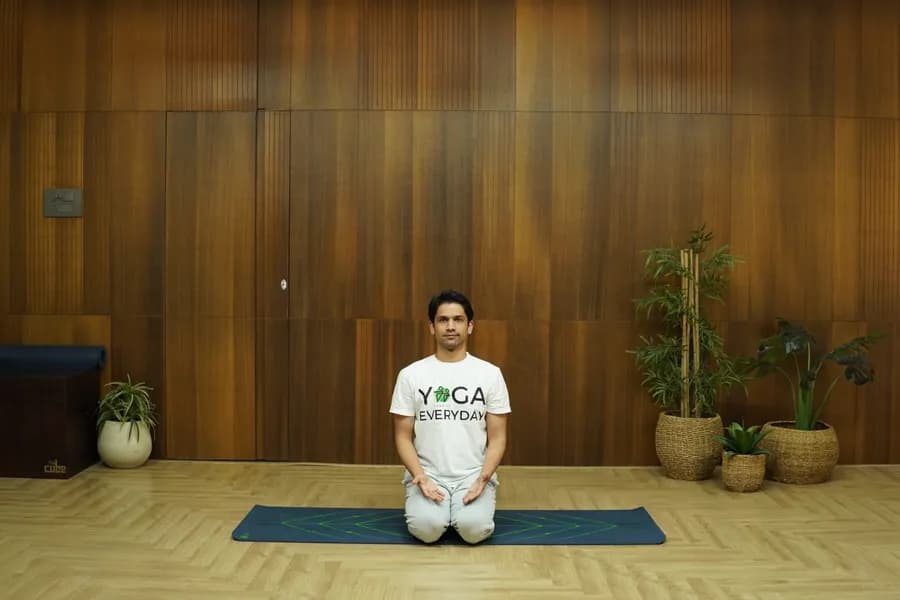
Vajrasana: How to Do It Benefits and Precautions
Practice vajrasana pose with Habuild. Try vajrasana to ease digestion, reduce back pain, and calm your mind. Ideal for all levels. Start your session today!

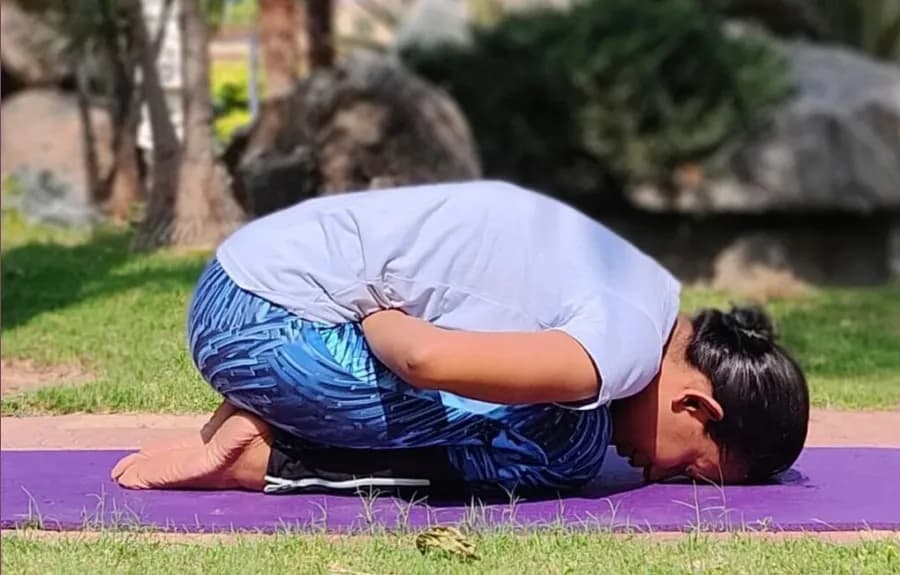
Mandukasana (Frog Pose): Steps Benefits for Diabetes and Digestion
Practice mandukasana with Habuild. Master the mandukasana pose to improve digestion, open the hips, and relieve abdominal tension. Start your yoga session!
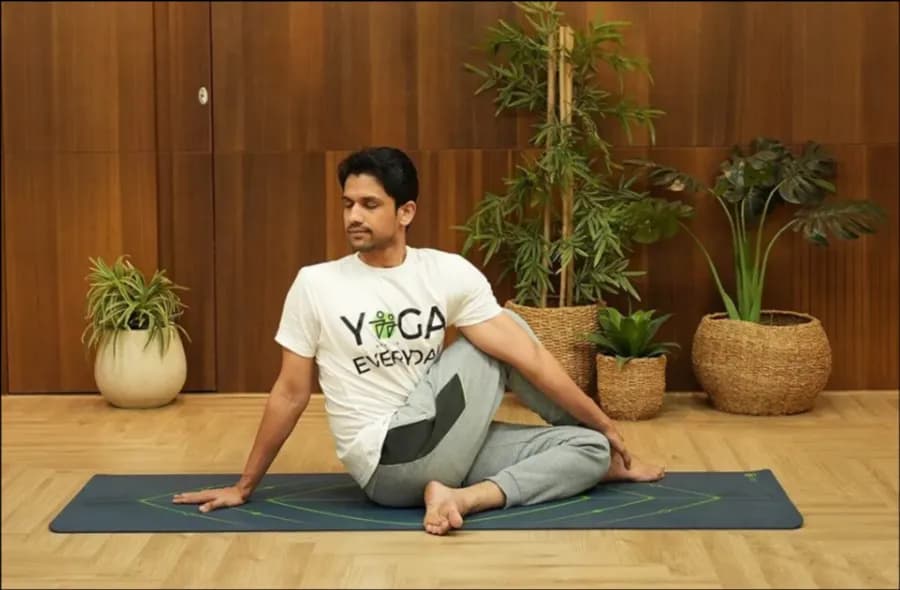
Ardha Matsyendrasana: Steps Benefits and How to Practice v2
Learn ardha matsyendrasana with Habuild. Discover ardha matsyendrasana benefits for spinal health, improved digestion, and flexibility. Start your practice now!

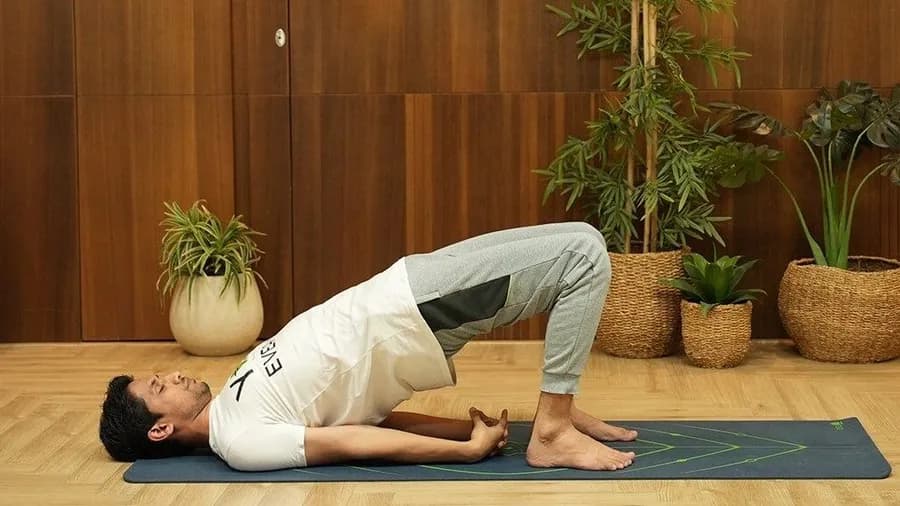
Setu Bandhasana (Bridge Pose): Steps Benefits and Modifications
Try setu bandhasana with Habuild. Master the setu bandhasana bridge pose to strengthen your spine, open the chest, and reduce stress. Start your session now!
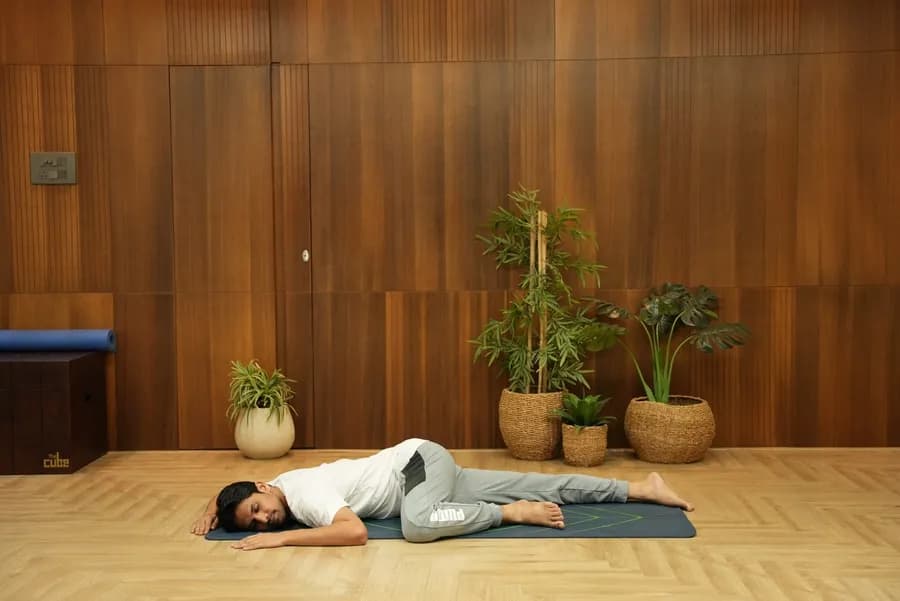
Makarasana (Crocodile Pose): Steps and Relaxation Benefits
Try makarasana with Habuild. Explore the makarasana pose to relieve back pain, reduce stress, and improve your spinal flexibility. Start your yoga today now!